Colour instead of force
The musical utterance is shaped through articulation, timing, phrasing, texture and the choice of stops — not through pianistic weight of touch.
2006–2026 · 20 years online
Twenty years of music, encounters and artistic history. Edyta Środa’s website has been online since 2006 and is now entering a new chapter.
Harpsichordist · Pianist · Conductor · Organist · Music Educator
Harpsichord
For Edyta Środa, the harpsichord is neither a historical curiosity nor a “quieter piano”. It is an independent world of sound — founded on rhetoric, precision of gesture, sensitivity to style and a living dialogue with the music of earlier centuries.
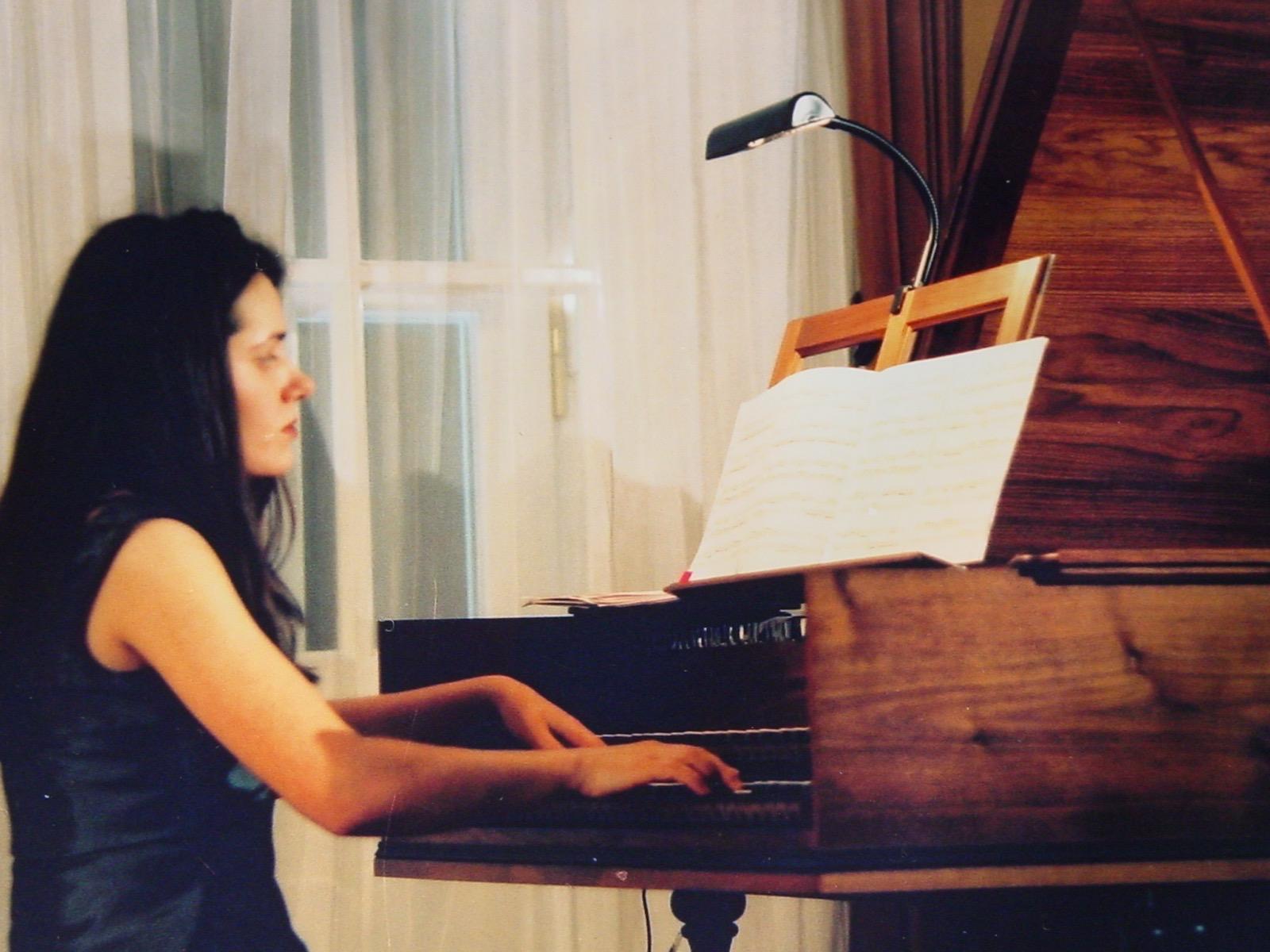
The instrument’s language
On the piano, the velocity of the hammer directly affects the volume of a note. In the harpsichord a plectrum plucks the string, so the distinction between piano and forte is not created in the same way. This does not mean an absence of dynamics; it shifts the expressive weight to other parameters: articulation, the time between notes, direction of phrase, agogic inflection, texture, registration and the balance between voices.
This is where the real difficulty begins. The performer must make the voices breathe without the aid of a pianistic crescendo, and allow harmonic tension to be heard without mechanical accentuation. A minute difference in the length of a note can alter the character of a motif, while articulation that is too uniform can deprive polyphony of hierarchy and rhetorical meaning.
For Edyta, the harpsichord is an instrument of speech. A phrase has syntax, emphasis, direction and breath. A rest is not an absence of sound but part of the utterance, and an ornament should never be an embellishment pasted onto the surface. Its place and execution arise from harmony, style and the tension of the whole musical sentence.
Awareness of style does not lead to a single “correct” performance. On the contrary, it reveals the field of decisions left to the performer by the composer. French agréments, Italian figuration and German polyphony each demand a different approach. A rhythm notated in identical values may acquire a different weight according to the dance, tempo and function of the motif.
The harpsichordist also works with resonance. Once a string is plucked, its sound begins naturally to decay; the order in which keys are released, the overlapping of sonorities and the conscious use of space between notes are therefore crucial. Richness does not arise from constant density, but from knowing how to leave room for the music.
This sensitivity was formed through many years in the class of Professor Elżbieta Stefańska, studies in Karlsruhe and international masterclasses. Each teacher brought a different way of listening to the source and the instrument. Their experience is not a catalogue of names, but a polyphonic tradition within which the performer must ultimately establish a position of her own.
The harpsichord is not a piano from an earlier age. Its power arises from colour, articulation, the breath of the phrase and the performer’s imagination.
The instrument
When a key is depressed, the jack raises a plectrum that plucks the string. This mechanism gives the harpsichord its distinctive, luminous colour and separates it from the piano, where sound is produced by the blow of a hammer.
The musical utterance is shaped through articulation, timing, phrasing, texture and the choice of stops — not through pianistic weight of touch.
The harpsichord belongs both to the keyboard family and to the plucked string instruments. The keyboard activates the mechanism, but the vibrating string remains the source of sound.
Construction, disposition, stops, action and school of instrument making all influence voice-leading, choice of tempo and balance of sound.
Action and touch
Depressing a key raises the jack, and the plectrum mounted within it passes across the string and sets it in vibration. When the key is released, the jack descends; the pivoting tongue allows the plectrum to pass the string, and the damper silences it. This apparently simple arrangement requires precise regulation and remains highly sensitive to the condition of the instrument.
The finger’s contact with the key has a different function from its role at the piano, but it is never irrelevant. The performer feels the moment of the pluck and learns to organise the movement so that articulation remains clear and the hand free from unnecessary tension. The harpsichord does not reward force. It responds to precision, timing and the quality with which a gesture is prepared.
In concert practice, this also means accepting responsibility for the instrument before the performance: its condition, tuning, choice of stops and response in a particular acoustic. A historical instrument or modern copy is not a neutral device. It has its own personality, limitations and possibilities, which must be understood before a ready-made interpretation is imposed upon it.
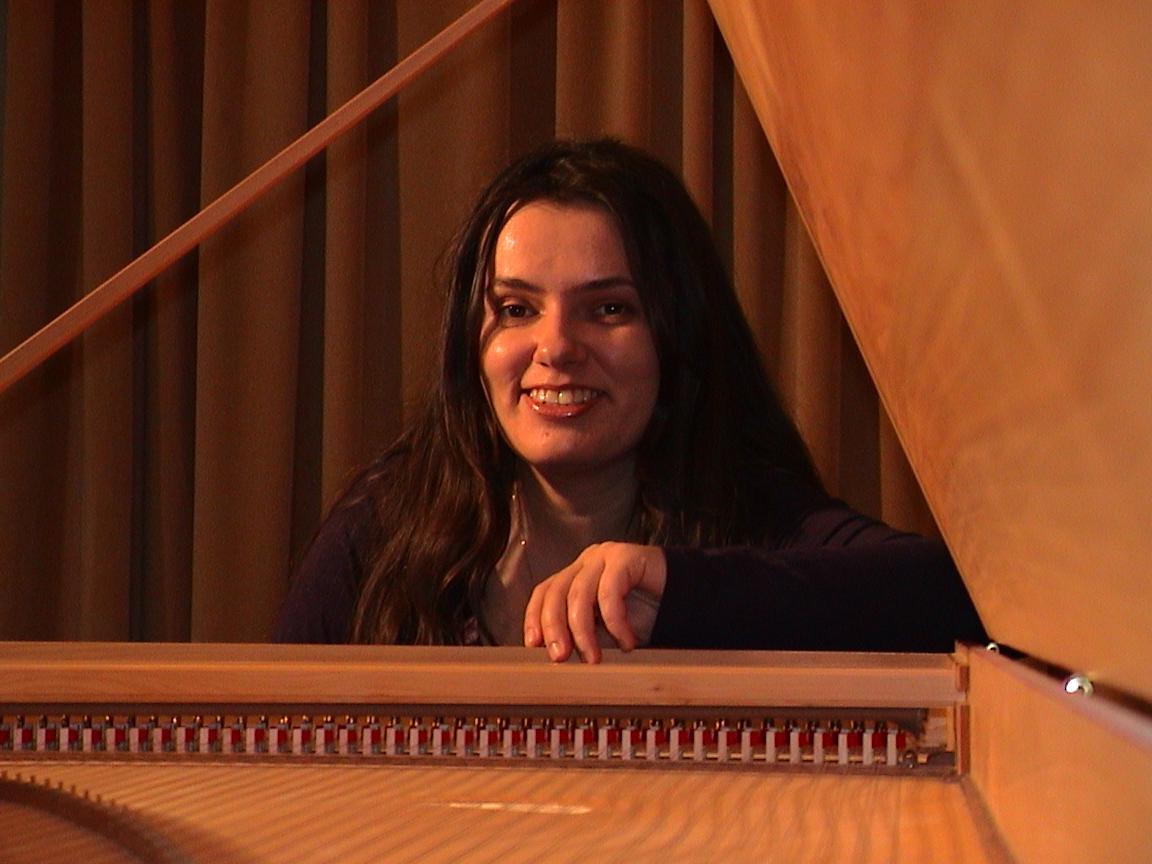
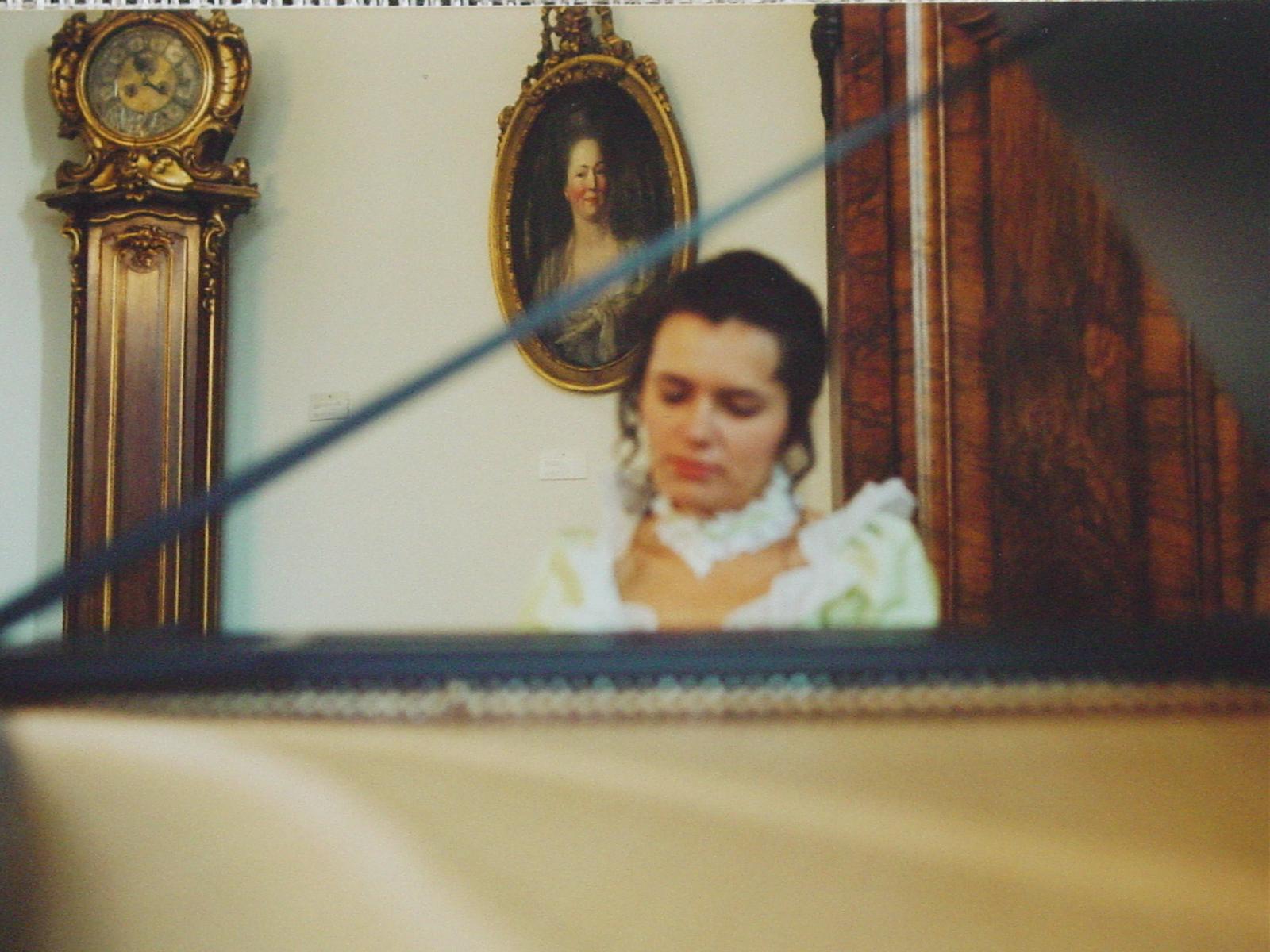
Historically informed performance
Interpreting early music requires knowledge of sources, ornamentation, basso continuo practice, historical principles of articulation and the rhetorical meaning of the phrase. Yet knowledge is only the beginning — its purpose is a performance that is convincing, alive and communicative. Historically informed playing should not sound like a demonstration of rules; it should lead to freedom founded on understanding.
Edyta developed this practice in Kraków and Karlsruhe and through international masterclasses, working with musicians including Gustav Leonhardt, Huguette Dreyfus, Andreas Staier, Kenneth Gilbert, Bob van Asperen, Jesper Christensen, Siebe Henstra and Menno van Delft. She took part in projects in Amsterdam, Leipzig, Daroca, Karlsruhe and Stuttgart.
Contact with such different performing personalities made it possible to compare traditions, approaches to realising the text and aesthetic priorities. Mature interpretation does not consist in copying a master. It emerges when knowledge drawn from sources, experience of the instrument and one’s own ear begin to act as a single whole.
Basso continuo and chamber music
Basso continuo is one of the central areas of Edyta’s harpsichord practice. Figured bass does not prescribe a complete texture fixed once and for all. The performer reads the harmony and constructs it in time, adapting chordal disposition, number of voices, register, rhythmic activity and degree of intervention to the performing forces and character of the work.
In a sonata with a single melodic instrument, the continuo can respond to the smallest change in a partner’s articulation. In a larger ensemble it must maintain the foundation without overcrowding the texture. In vocal music, breath and text become paramount; in a concerto, the relationship between the solo group and orchestra; and in church music, the natural reverberation of the space as well.
A good continuo player listens vertically and horizontally at the same time. She understands the harmonic function of every moment while remaining aware of the phrase’s long trajectory. She knows when to emphasise a dissonance, when to allow it to resonate and when almost to disappear, leaving the solo line in the foreground. She is a co-creator of the dramaturgy even when her work is not always in view.
Edyta’s experience includes work with orchestras, choirs and early-music ensembles in Poland and abroad. She has performed with groups including Consortium Jagiellonicum, Forum Sinfonia, Schleswig-Holstein Orchester, the orchestra of the Internationale Händel-Akademie Karlsruhe, Camerata Bonn, Vocalensemble Rastatt, La Banda Palatina and Kurpfälzisches Kammerorchester Mannheim.
Separate studies in harpsichord chamber music at the Hochschule für Musik Karlsruhe, completed in 2005, deepened this strand of her work. Chamber music demands both independence and humility. Each musician brings an individual vision, yet the whole can emerge only through shared breath, an understanding of function and readiness to respond immediately.
In the international ensemble La Fiamma, Edyta was not only the harpsichordist but also one of the ensemble’s leaders. La Fiamma performed in Germany and Poland and reached the final of the Biagio-Marini-Wettbewerb in May 2003. This work united performance practice, chamber partnership and shared responsibility for the artistic conception.
Instruments in Edyta’s practice
Years of experience with different instruments make it possible to recognise their individual character and adapt one’s playing to their construction, the repertoire and the concert space.
Edyta owns an Italian-style harpsichord built by Bizzi. The bright, direct sound and rapid response of this type of construction work particularly well in Italian repertoire, chamber music and basso continuo. Yet it is not a “ready-made colour”: each room, registration and ensemble calls for the balance to be found afresh.
The family-run Bizzi workshop was founded in 1975. Its history combines instrument making, conservation work on historical collections — including those of the Museo del Teatro alla Scala and Museo Correr — and participation in establishing the Milanese school of lutherie. Today, based at Villa Bossi, the firm builds harpsichords, clavichords and historical pianos, grounding its work in the study of surviving originals.
Edyta’s former website preserved extensive documentation of the Studio model inspired by Giovanni Battista Giusti’s Italian instrument of 1679. Bizzi’s current catalogue also presents a Giusti 1679 model, but its present specifications should not automatically be attributed to Edyta’s instrument. What matters here is personal experience of the individual instrument, not a catalogue table.
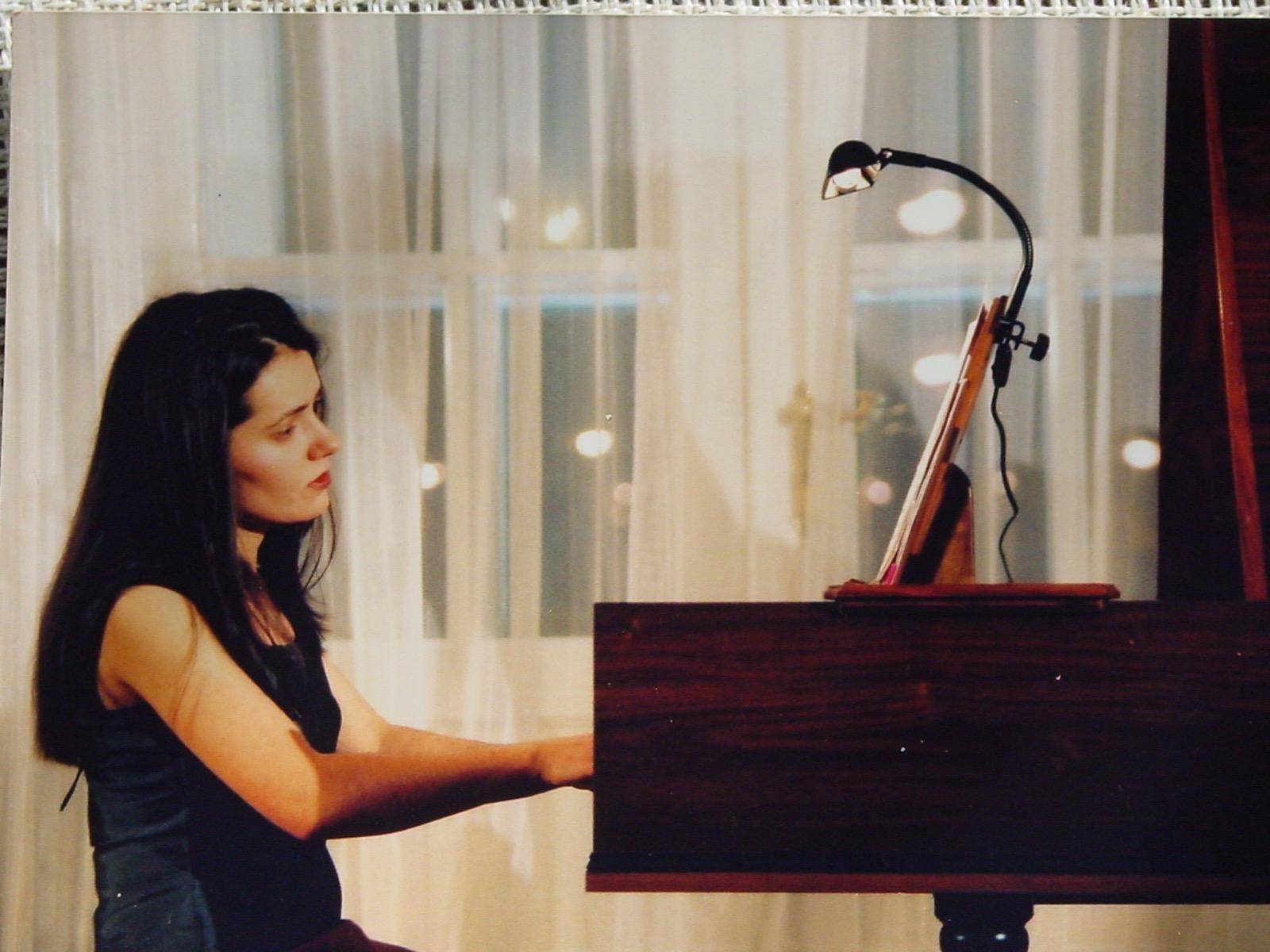
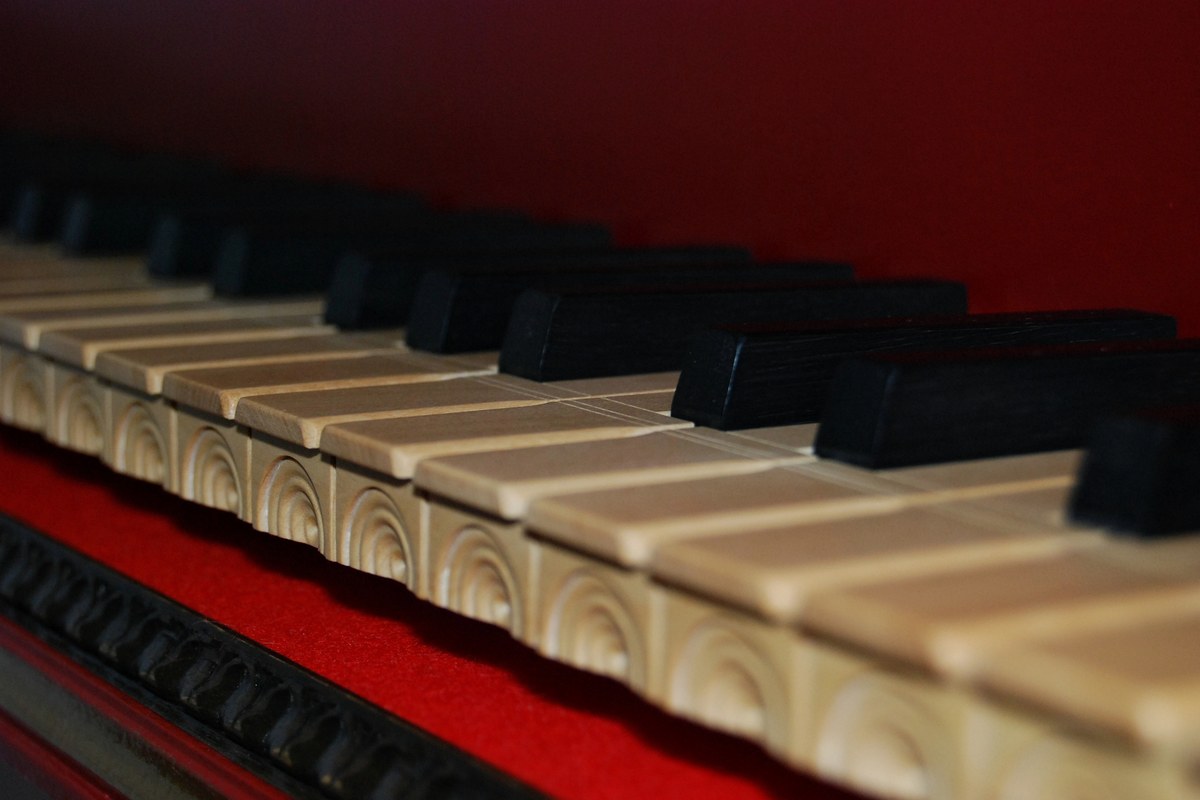
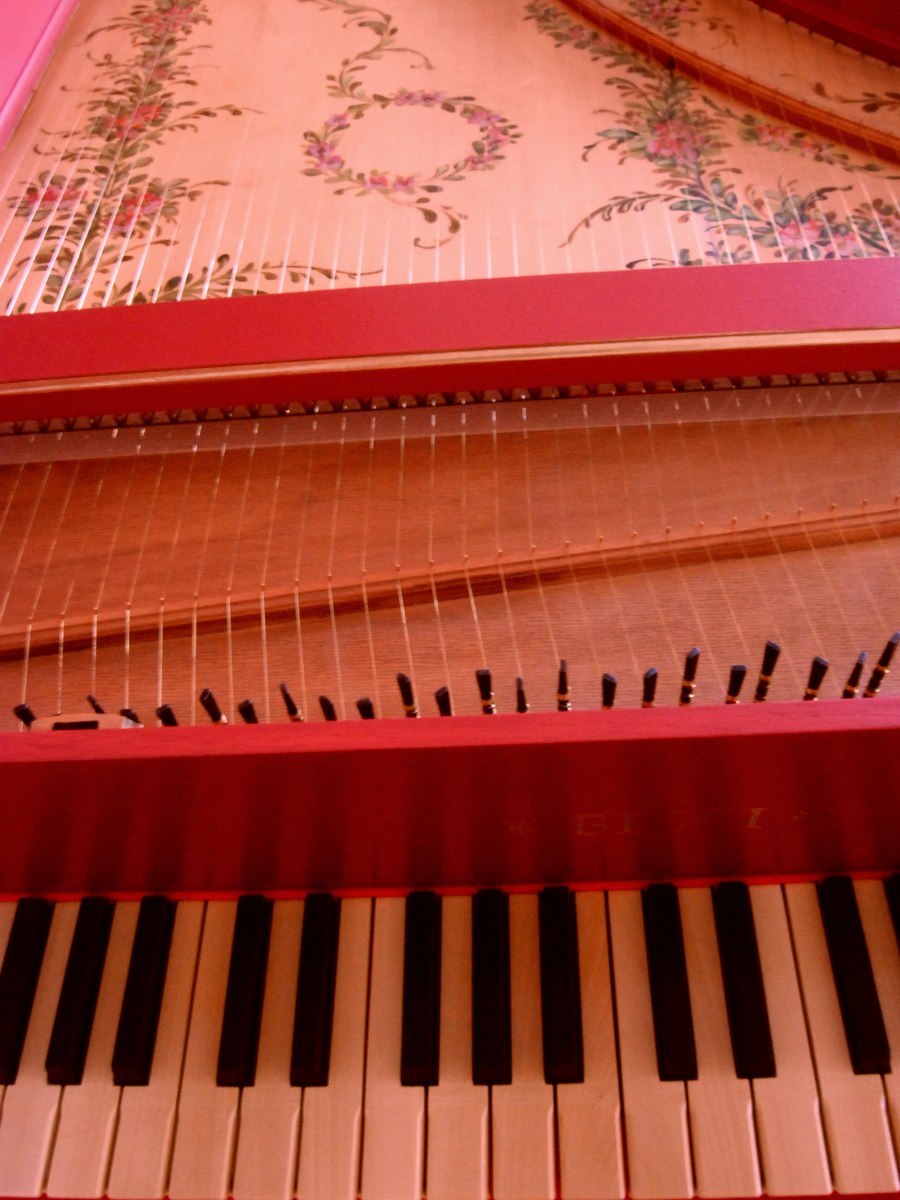

Edyta has played a French instrument by von Nagel. Reinhard von Nagel’s workshop became known for building modern instruments after French, Flemish, Italian and German models. Each instrument is voiced, regulated and finished individually for its future owner.
The workshop’s significance is also reflected in institutional collections: the Centre de musique baroque de Versailles documents a two-manual Flemish von Nagel instrument from 1992, designed to work at several historical pitch standards.
Edyta’s experience of Merzdorf instruments included harpsichords and spinets used in her studies, courses and concert work. The family firm was founded in 1920 and is now led in its third generation by master instrument maker Susanne Merzdorf in Remchingen.
The workshop hand-builds Italian, French, Flemish and German harpsichords, as well as clavichords, spinets and historical pianos. Since the 1970s, surviving historical instruments have served as its point of reference; its work also includes restoration, concert servicing and hire.
The lightness of Italian construction, the more substantial case of the Flemish tradition, the expanded French double-manual harpsichord and English experiments in extending expression are more than names of styles. They alter keyboard resistance, length of decay, balance between stops and the handling of texture.
An encounter with a new harpsichord therefore begins by listening: to a single note, the balance of the stops, the room’s response and the point at which the action answers the performer’s gesture.
Schools of instrument making
The term “harpsichord” embraces instruments that differ in construction, compass, scaling, disposition of stops, number of manuals and treatment of resonance. A copy of an Italian instrument usually speaks differently from an elaborate French model; a northern European instrument may require a different approach to texture from a light spinet.
Edyta owns an Italian model built by the highly regarded maker Bizzi. The clarity and directness of this type of instrument favour precise articulation, Italian repertoire, chamber music and continuo. This does not limit its possibilities: the final result depends on the individual instrument, registration, space and manner of playing.
In her professional practice she has also played a French instrument by von Nagel, German instruments by Merzdorf, English instruments and many other harpsichords and spinets. Each encounter required a rapid understanding of keyboard resistance, plucking point, length of decay and balance between stops.
A performer should not fight the instrument by trying to force upon it a sound remembered from another. She must find the point at which her conception meets the harpsichord’s actual possibilities. This may require a change of tempo, a lighter continuo texture, a different distribution of ornaments or clearer differentiation of articulation.
The space matters as well. A dry room exposes detail and shortens natural resonance; a church prolongs the sound and demands greater discipline in releasing the keys. In an ensemble, proportions depend on the number of performers, the type of bows, the handling of the voice and the placement of the instrument.
Experience of many instruments is therefore more than a collection of concert memories. It develops an adaptable ear and teaches the performer to separate the essence of an interpretation from manual habit. A harpsichordist arrives on stage with a prepared conception, but the first rehearsal with the instrument always remains a moment of genuine discovery.
Repertoire
Edyta’s repertoire spans music from the sixteenth to the eighteenth century: solo works, chamber music, harpsichord concertos, oratorios and basso continuo parts in instrumental and vocal-instrumental ensembles. Such breadth means encountering many languages — from Renaissance polyphony and variation forms, through the seventeenth-century freedom of stylus fantasticus, to the mature structures of suite, sonata and concerto.
Every form asks different questions of the performer. A dance requires understanding of its characteristic pulse and gesture; a fugue, of the hierarchy of entries and architecture of tension; a prelude, of a freedom that does not dissolve the form. Chamber and oratorio repertoire add responsibility for the relationship with text, soloists and the full performing forces.
Alongside European repertoire, early Polish music holds an important place — presented not as a museum exhibit, but as part of a living performance culture. A concert programme may set a canonical work beside one that is less often heard, while historical commentary helps the audience perceive connections without replacing the music itself.
The repertoire presented on the website will gradually be expanded with composers’ names, programmes, recordings and concert documents. Both archival material and new performances will be retained, because only together do they reveal the continuity of Edyta’s artistic work.
Working on a piece
Three brief encounters with the sound
Preparing repertoire begins with understanding form, harmony and texture. In polyphonic music every voice must have direction, but not every voice can be equally important at every moment. In a dance, the written rhythm must be related to gesture and character; in a free work, one must find the boundary between rhetorical liberty and the dissolution of structure.
The next stage is the choice of articulation. This is not a matter of mechanically assigning one manner of playing to an entire period. Articulation arises from motif, interval, harmony, metre and tempo. Two similar passages may need different breathing if they fulfil different functions within the sentence.
Ornamentation is part of the language. Its realisation depends on national style, period, position within the bar and harmonic tension. An ornament should intensify the affect and voice-leading. If it draws attention only to digital dexterity, it loses its musical function.
Tempo is not a number chosen independently of the instrument. It depends on character, density of texture, length of decay, acoustic and the capacities of one’s partners. A good tempo allows harmonic motion to be heard while keeping ornaments natural. Too fast, it may flatten the rhetoric; too slow, it may break the line and deprive a dance of pulse.
Ultimately, knowledge must become an intuition for action. In concert there is no longer room to demonstrate analysis. The performer listens to the moment, instrument, room and partners. Preparation is profound precisely so that freedom can emerge on stage.
Education and meeting the audience
Edyta creates programmes that combine a concert with a story about the harpsichord’s construction, history and sound. Audiences can see the action at close quarters, hear differences between stops and enter the musical world of earlier periods without the distance of a classroom lesson.
Such an encounter is conducted differently for children, adult music lovers and musicians. The language and the proportion between commentary and performance change, but the reliability of the content does not. The action can begin a conversation about articulation; a dance form, about the social life of its period; an ornament, about the difference between notation and practice.
In the events Edyta prepares, music does not serve as background to a lecture. It remains the central experience, while commentary opens the ear to details the listener might not previously have noticed.
Next