An exceptional diploma dissertation devoted entirely to Janusz Olejniczak as a pianist and teacher.
Press · documents · research archive
Newspapers, an award and an archive that tell us more
This is not a collection of random clippings. Every photograph, review, conversation and newspaper page adds another part to Edyta’s story — as a performer, researcher, student of two higher-education institutions and recipient of the City of Kraków Award.
The two exceptional themes given greatest prominence here are Poland’s only diploma dissertation on Janusz Olejniczak and the award Edyta received for this study in 1998. Around them, we present private photographs, press sources used for the dissertation, the award document, a brochure, reports from the ceremony, as well as concert reviews from Poland, Germany and Denmark.
Voices of the critics
Not merely praise — a precise description of the art of performance
„Phrasierungskunst und sprühende Rhythmik”
„eine umwerfende Virtuosität”
„als glänzende Solistin”
„gesamte Klangspektrum des Cembalos”
An exceptional scholarly and artistic achievement
Poland’s only diploma dissertation on Janusz Olejniczak
Edyta prepared her dissertation ‘Janusz Olejniczak — pianista i pedagog’ at a time when its subject was a living, internationally acclaimed artist. This was not an ordinary biographical compilation, but an extensive documentary undertaking that was highly regarded by the academic community and recommended for publication.
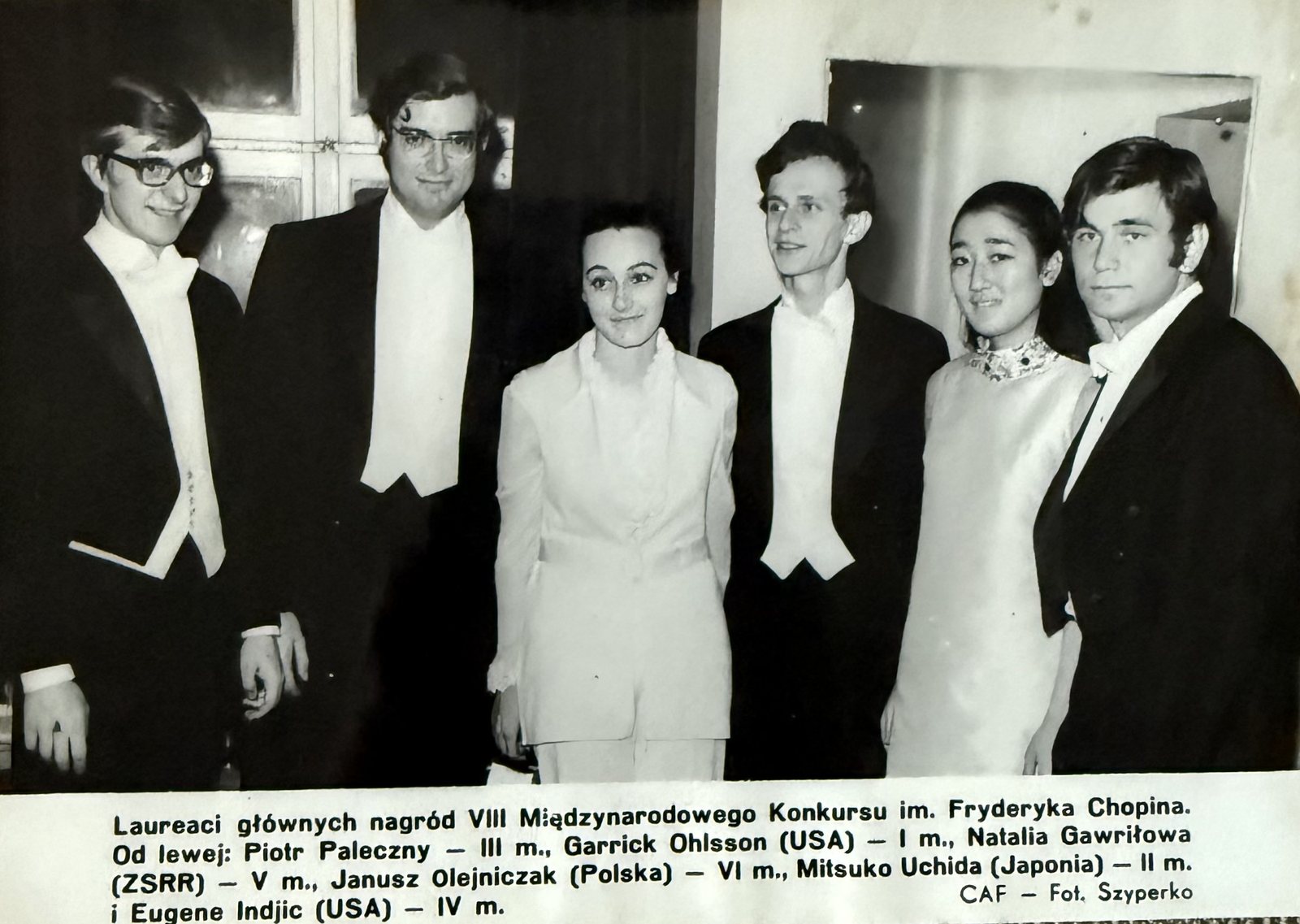
The significance of choosing this subject is demonstrated by Olejniczak’s own standing: a laureate of the 8th International Fryderyk Chopin Piano Competition and a multiple juror of the Competition, and one of the most important Polish pianists and Chopin interpreters. Context: the official Chopin Competition website.
The study was highly regarded and retains its research, documentary and historical value.
In 1998, the dissertation became the basis for Edyta receiving the city’s distinction for diploma works of particular value.
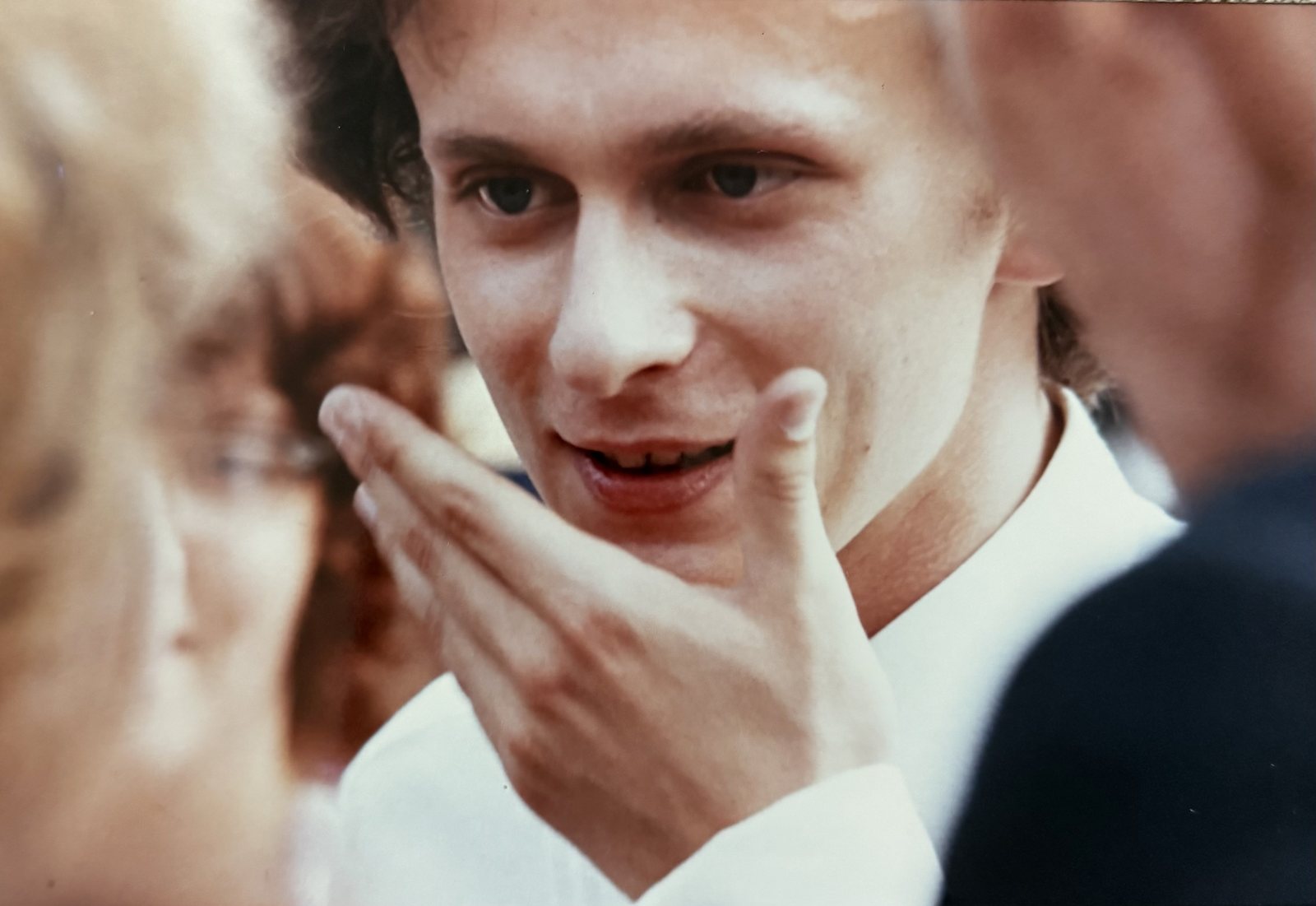
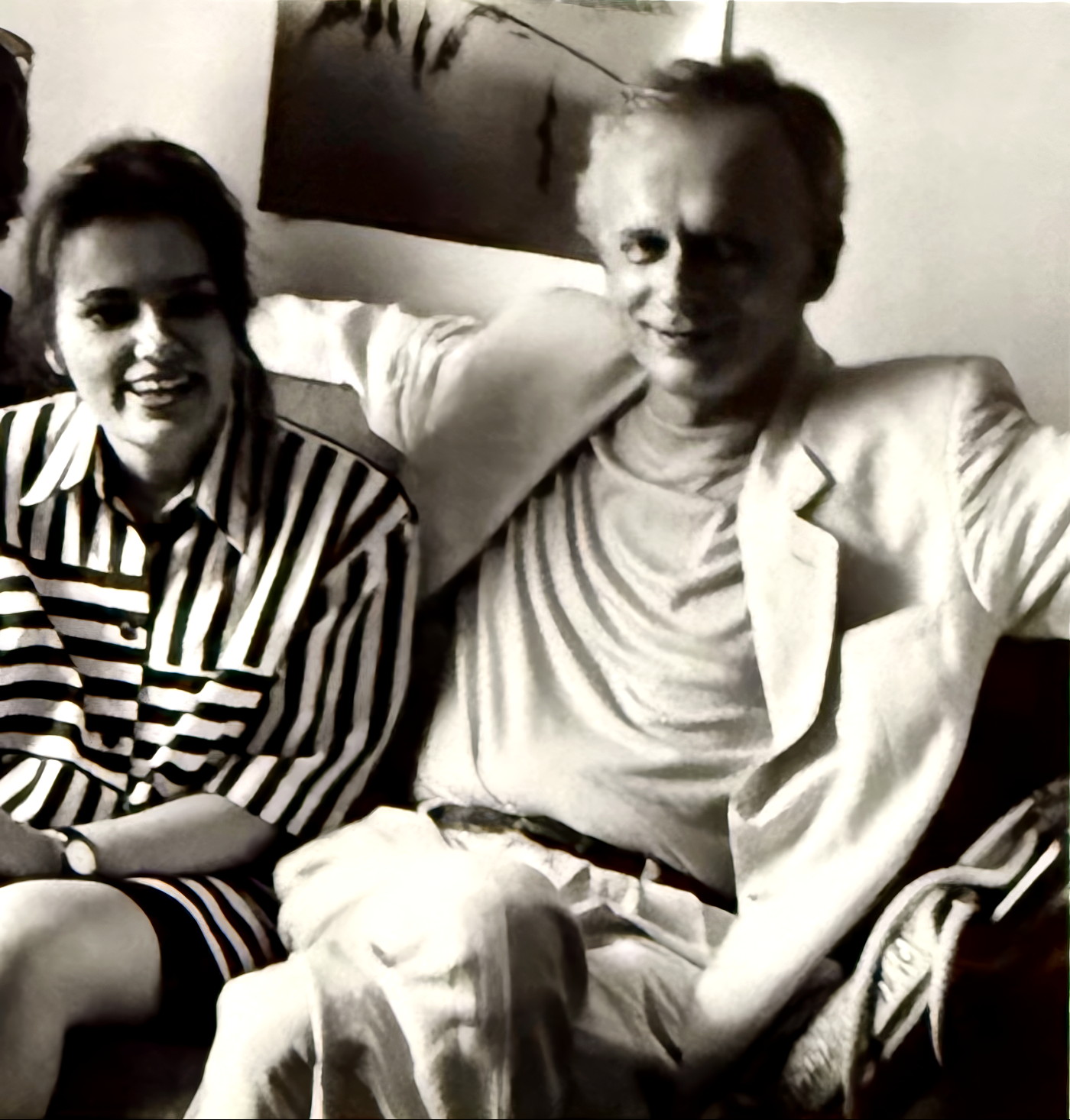
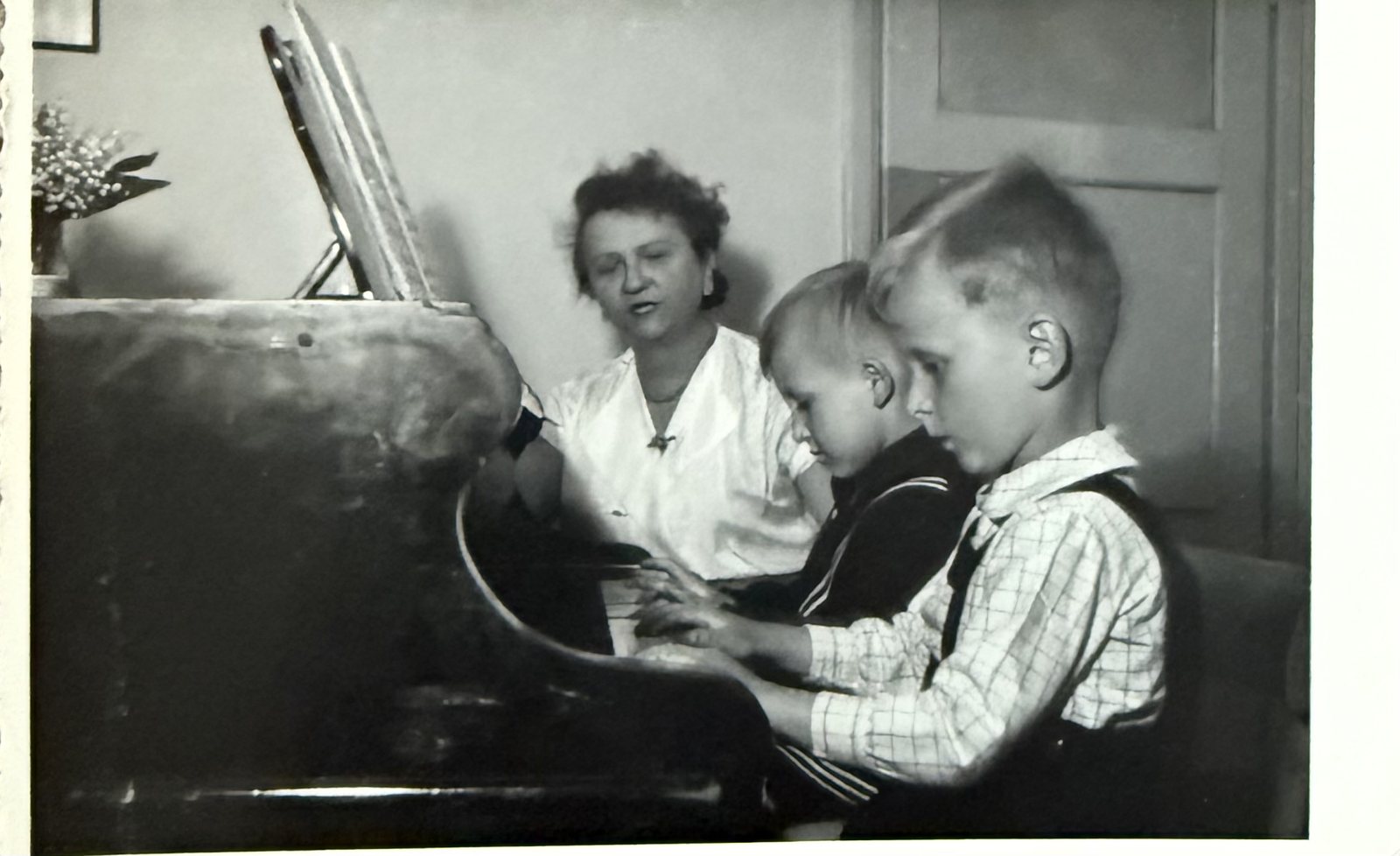
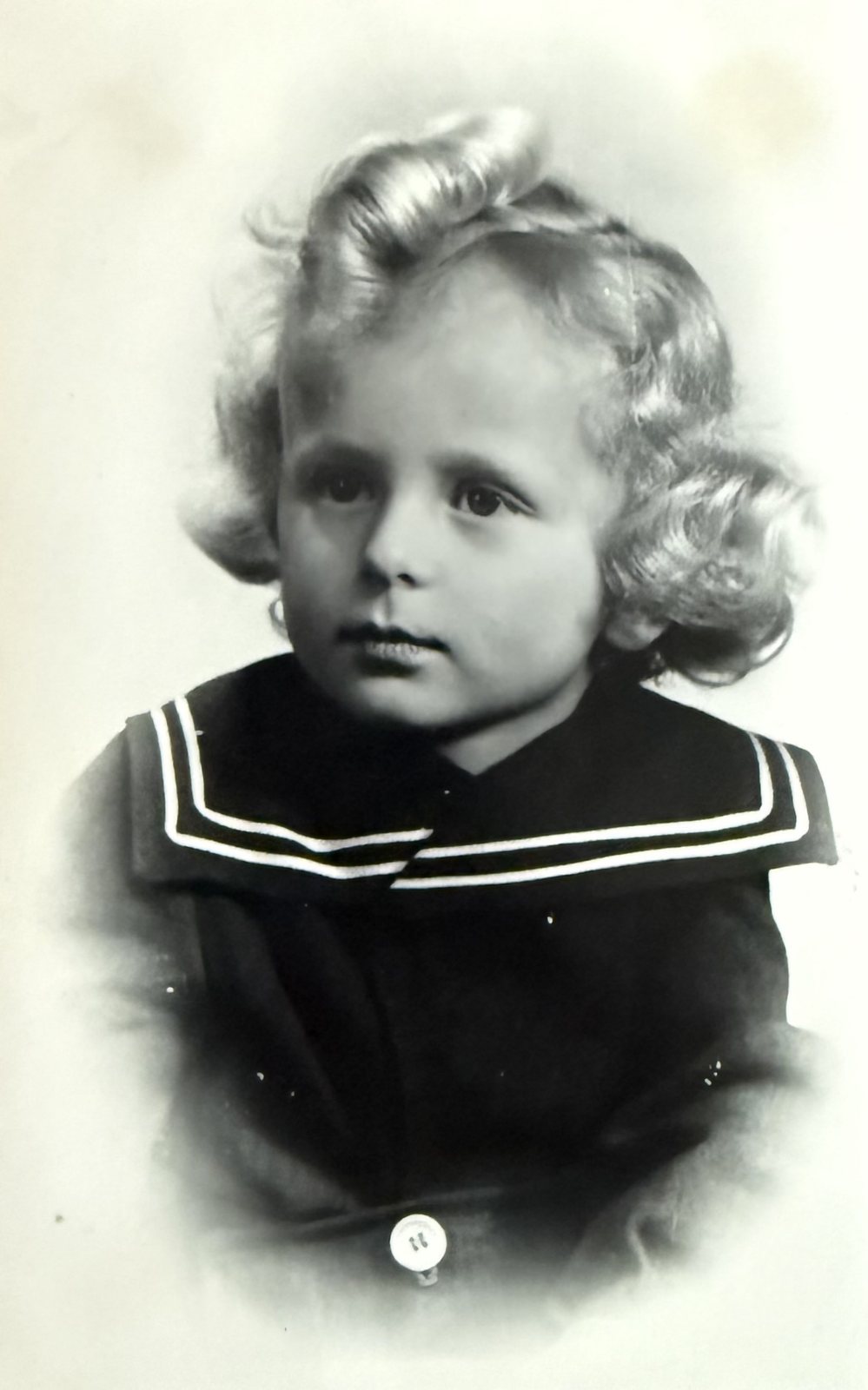
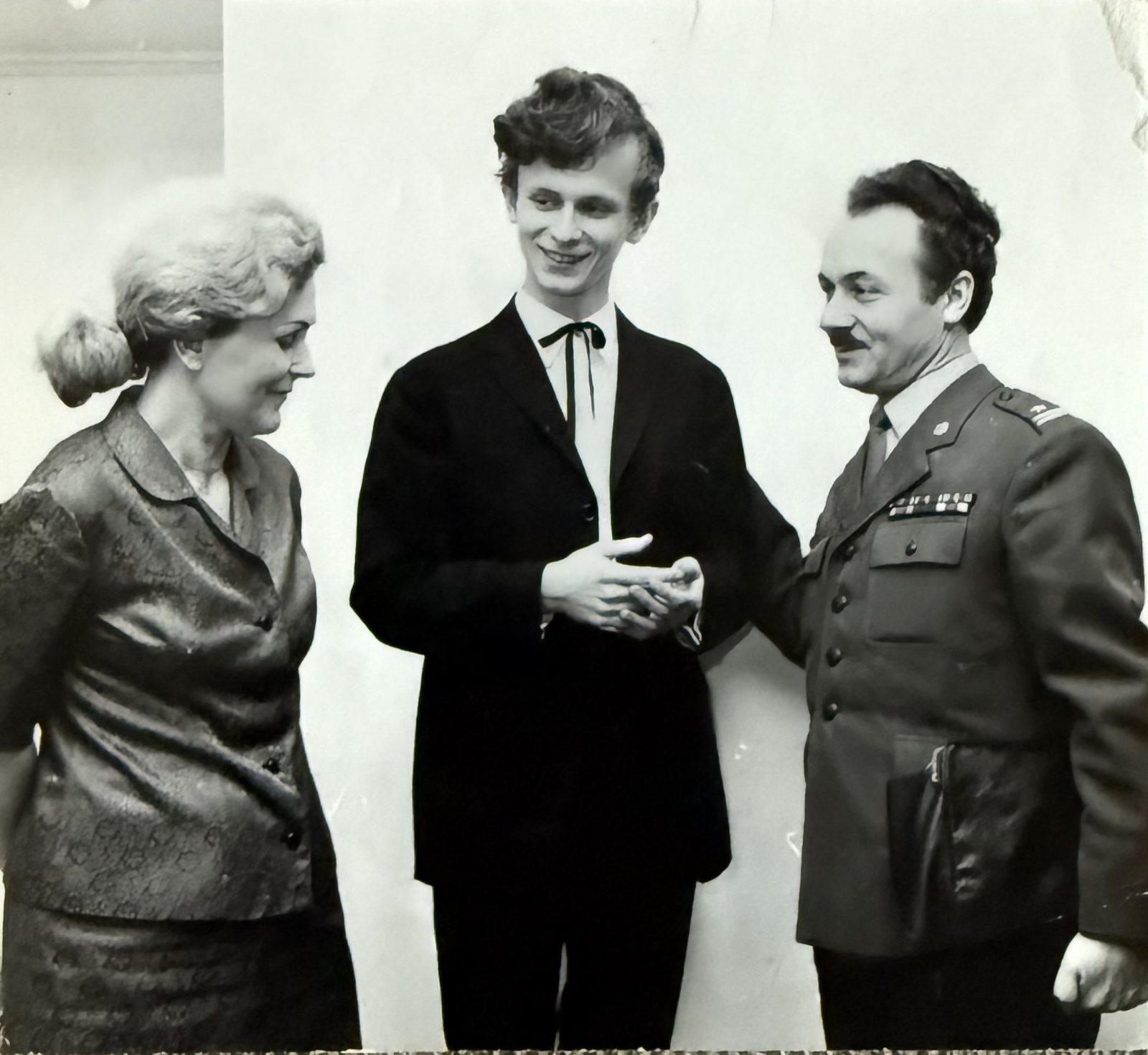
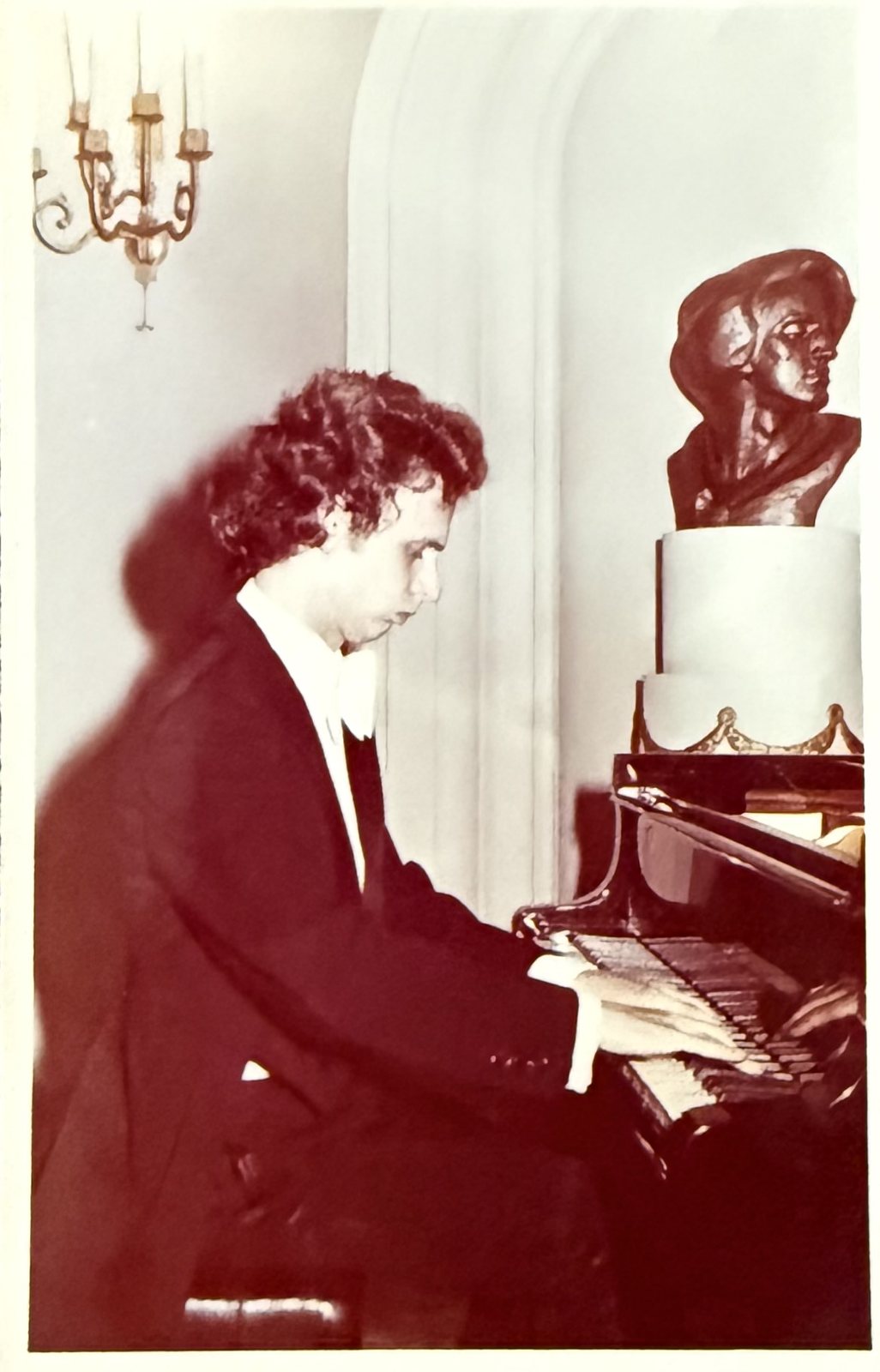
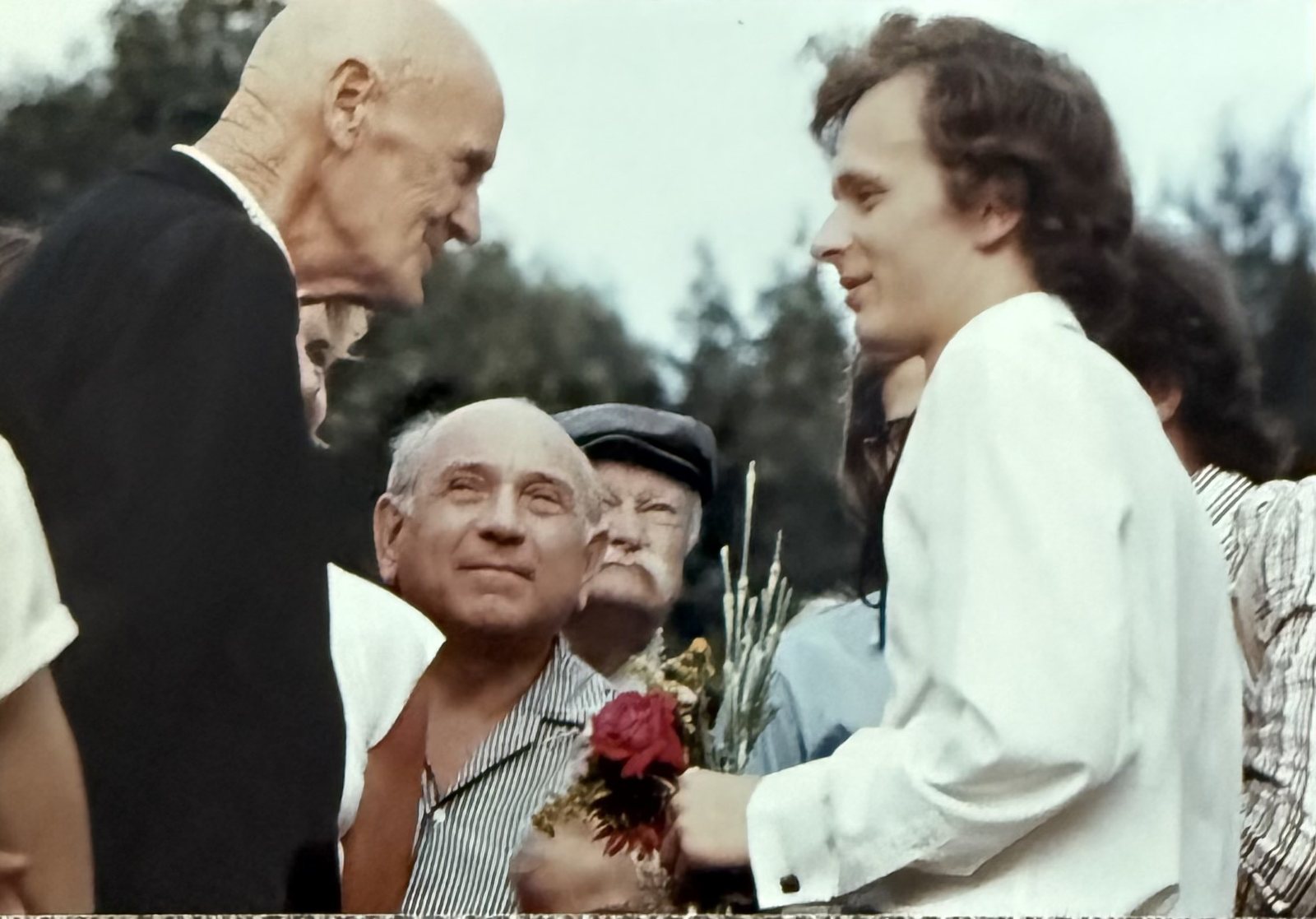
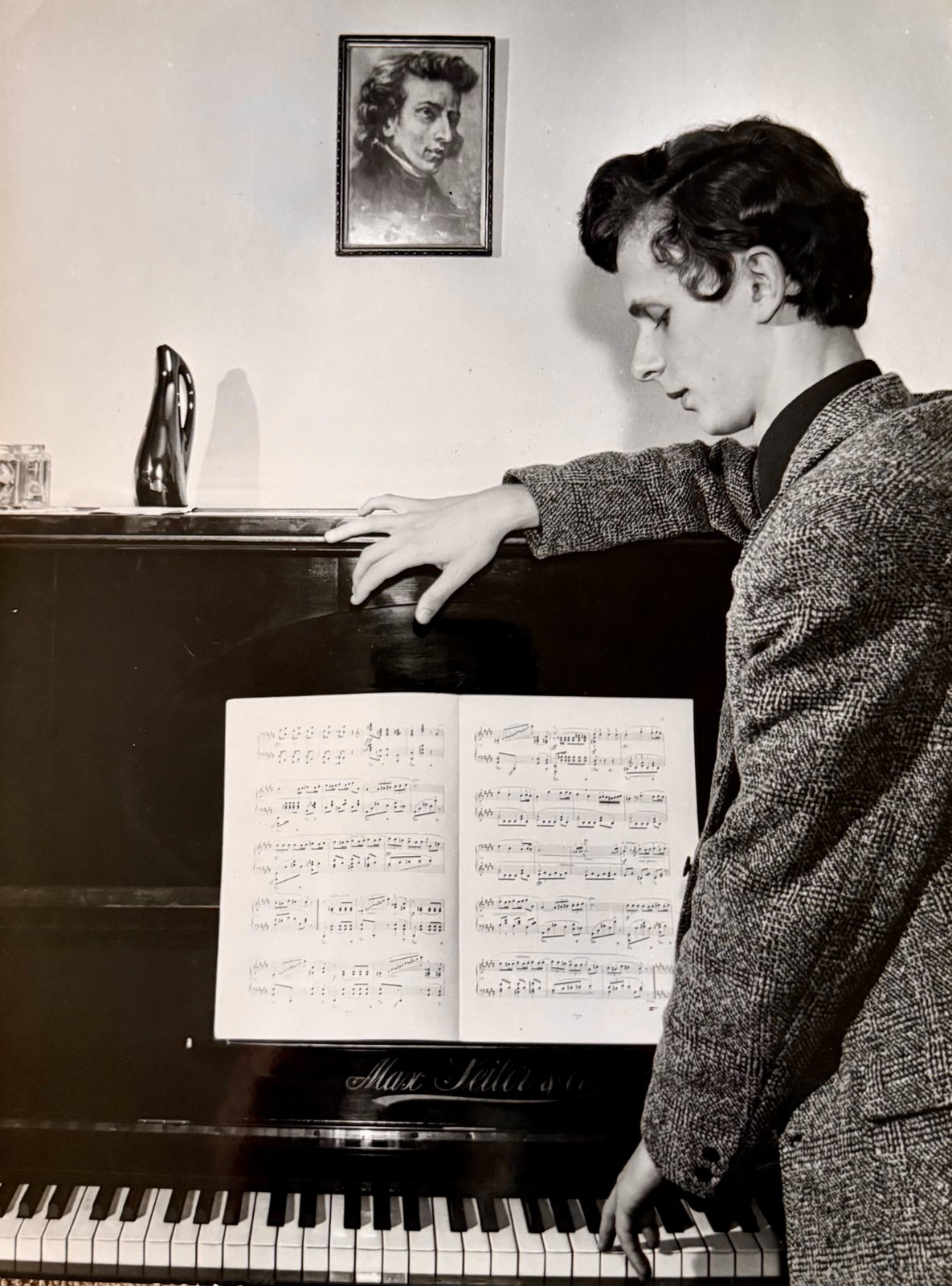
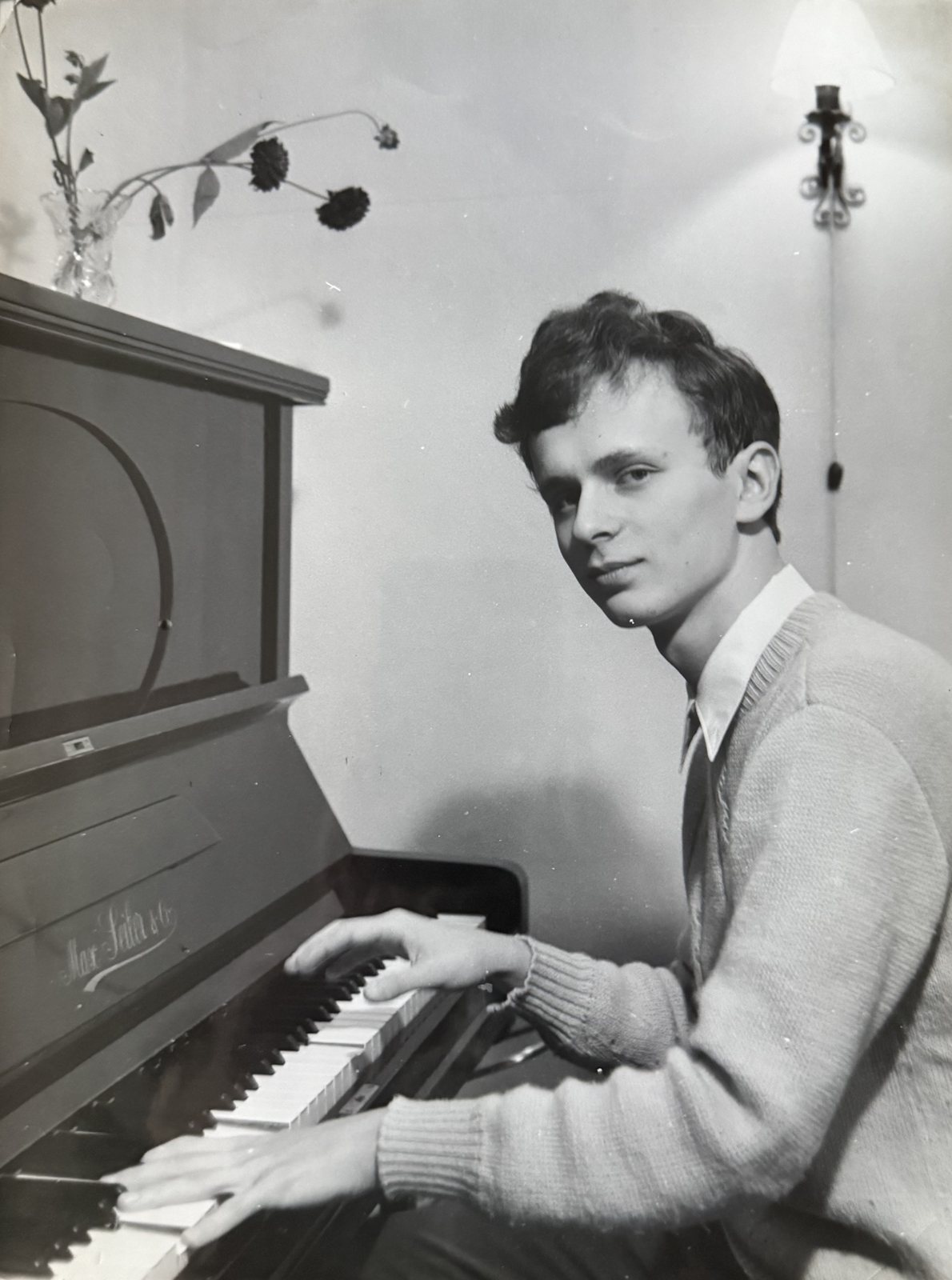
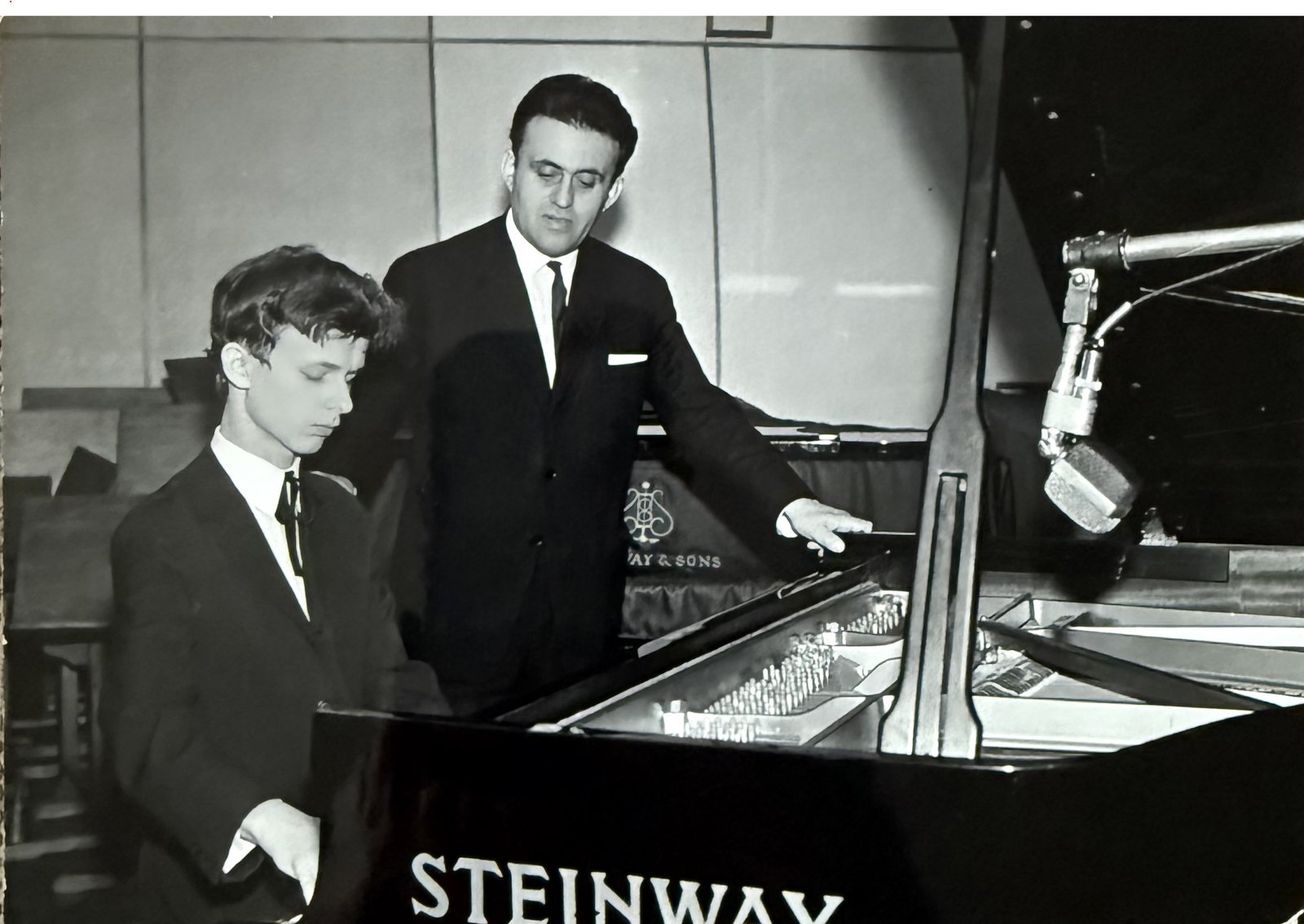
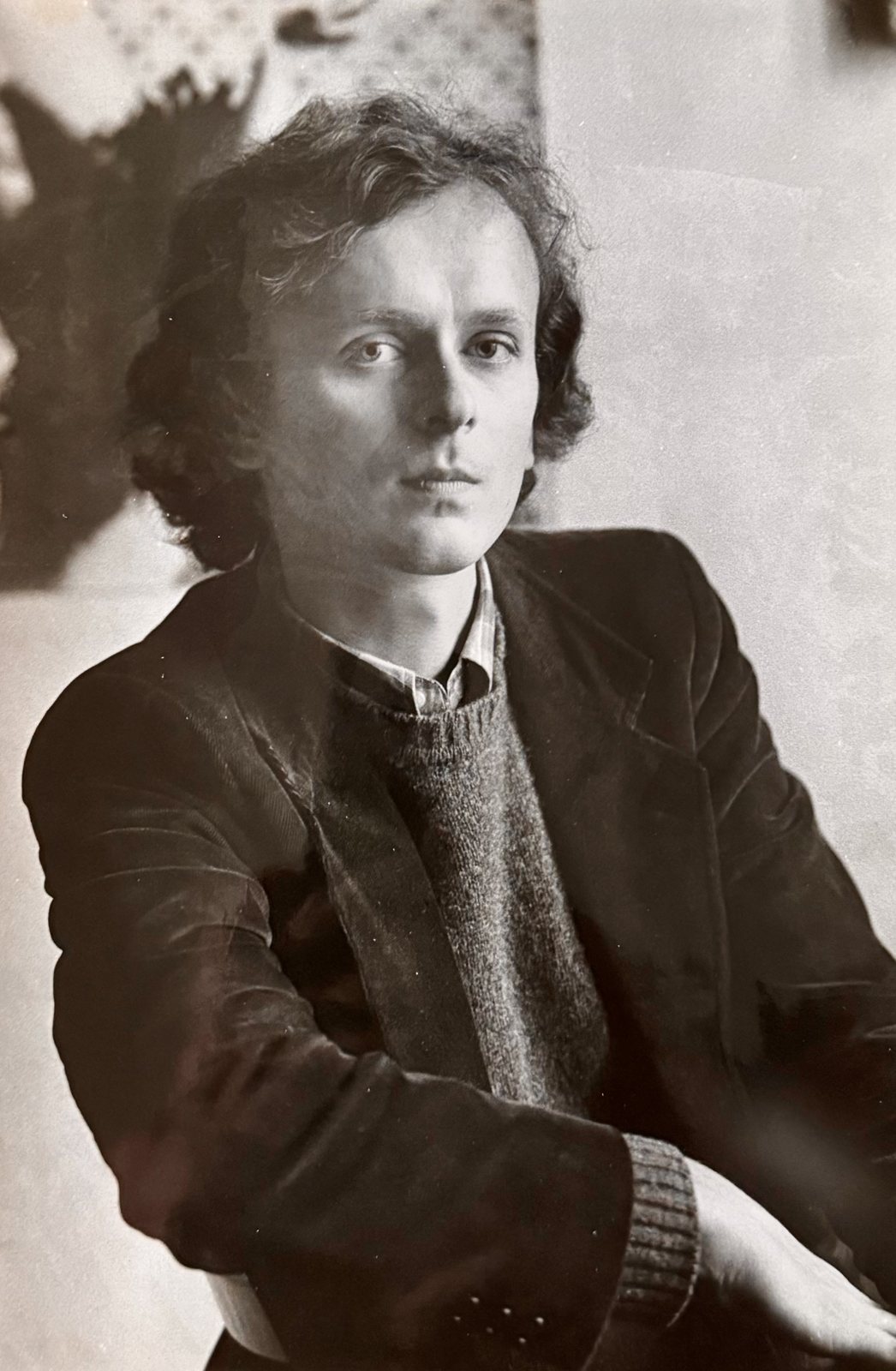
The materials include conversations, articles and photographs received from the pianist’s parents — including images from his childhood and youth.
A dissertation that became an archive
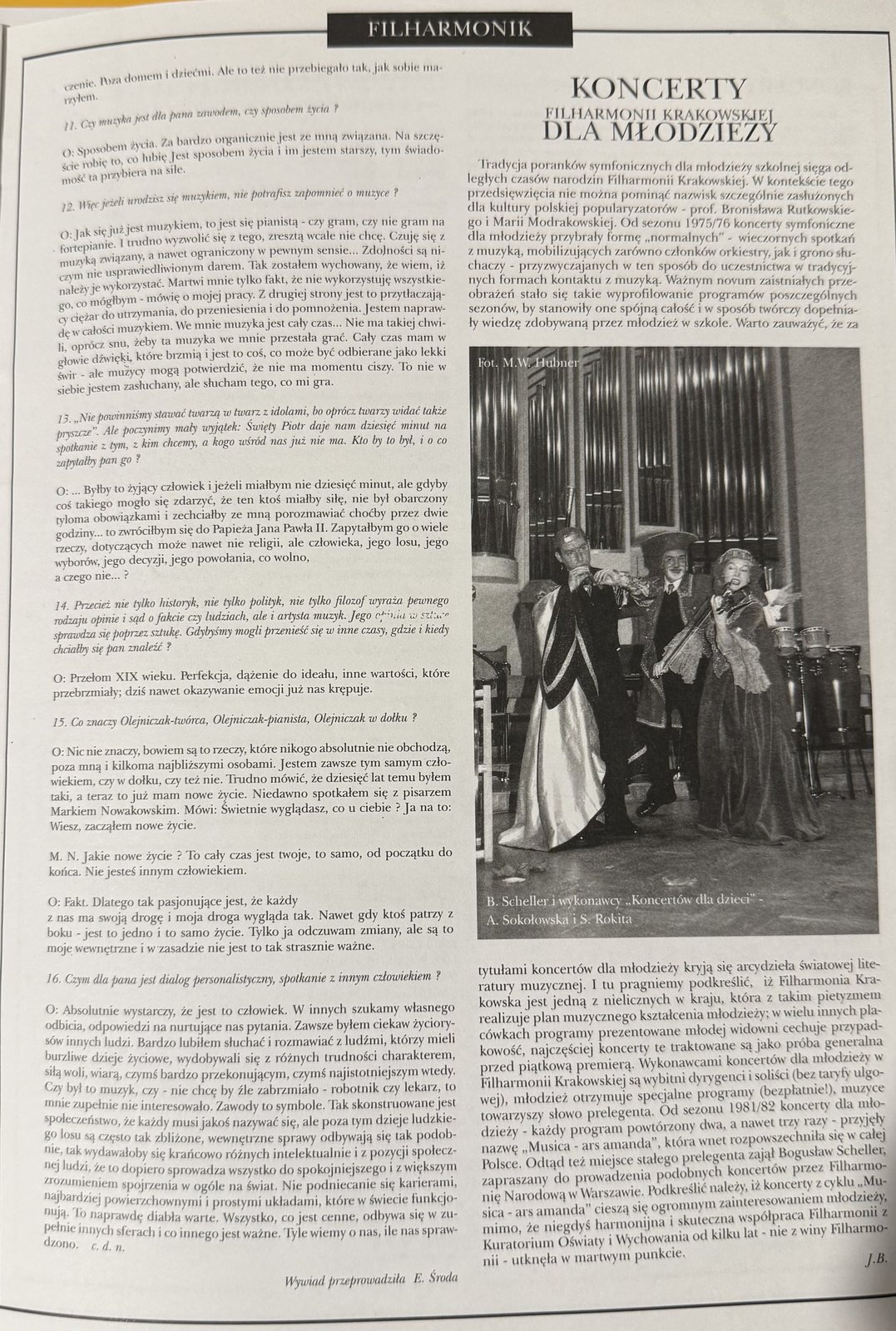
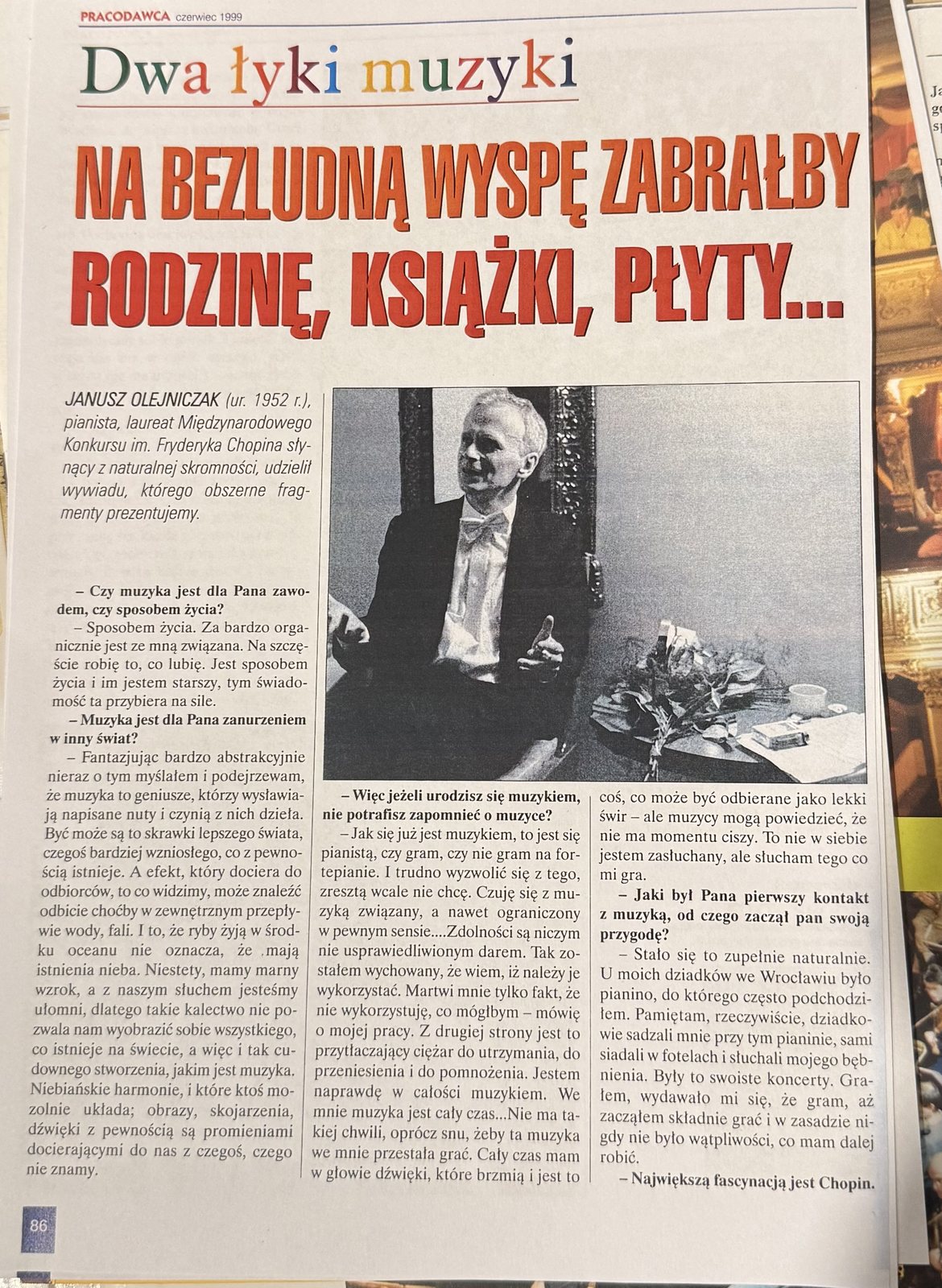
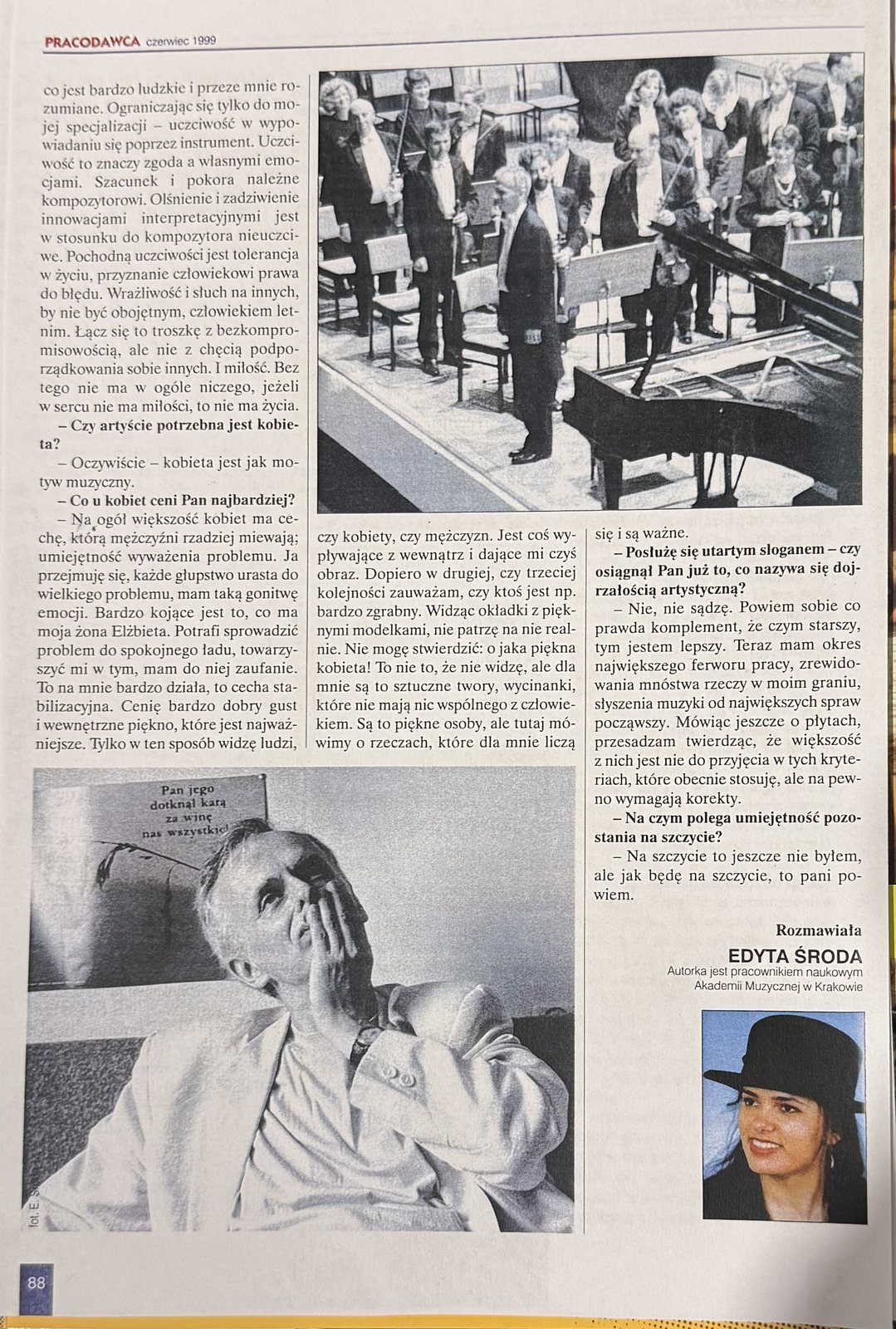
A portrait of the pianist built from conversations, press materials and photographs
The sources collected by Edyta portray Olejniczak not only through the concert platform and the Chopin Competition. They include materials about his childhood, first encounters with the piano, concert activity, teaching, recordings and the private side of the artist’s life.
The photographs are not decorations for the text. They form an integral part of the history of the dissertation’s creation and bear witness to the trust placed in Edyta when family materials were entrusted to her. We therefore present them as an organised collection of sources, preserving the distinction between the research archive and press coverage of Edyta’s own artistic activity.
In the future, this chapter may develop into a separate online publication: with the story of the dissertation, a bibliography, edited conversations and a selection of iconographic materials.
Photographs from the archive
From childhood and the first piano to an international career
Press sources for the dissertation
Conversations and articles — preserved in full and presented as a research archive
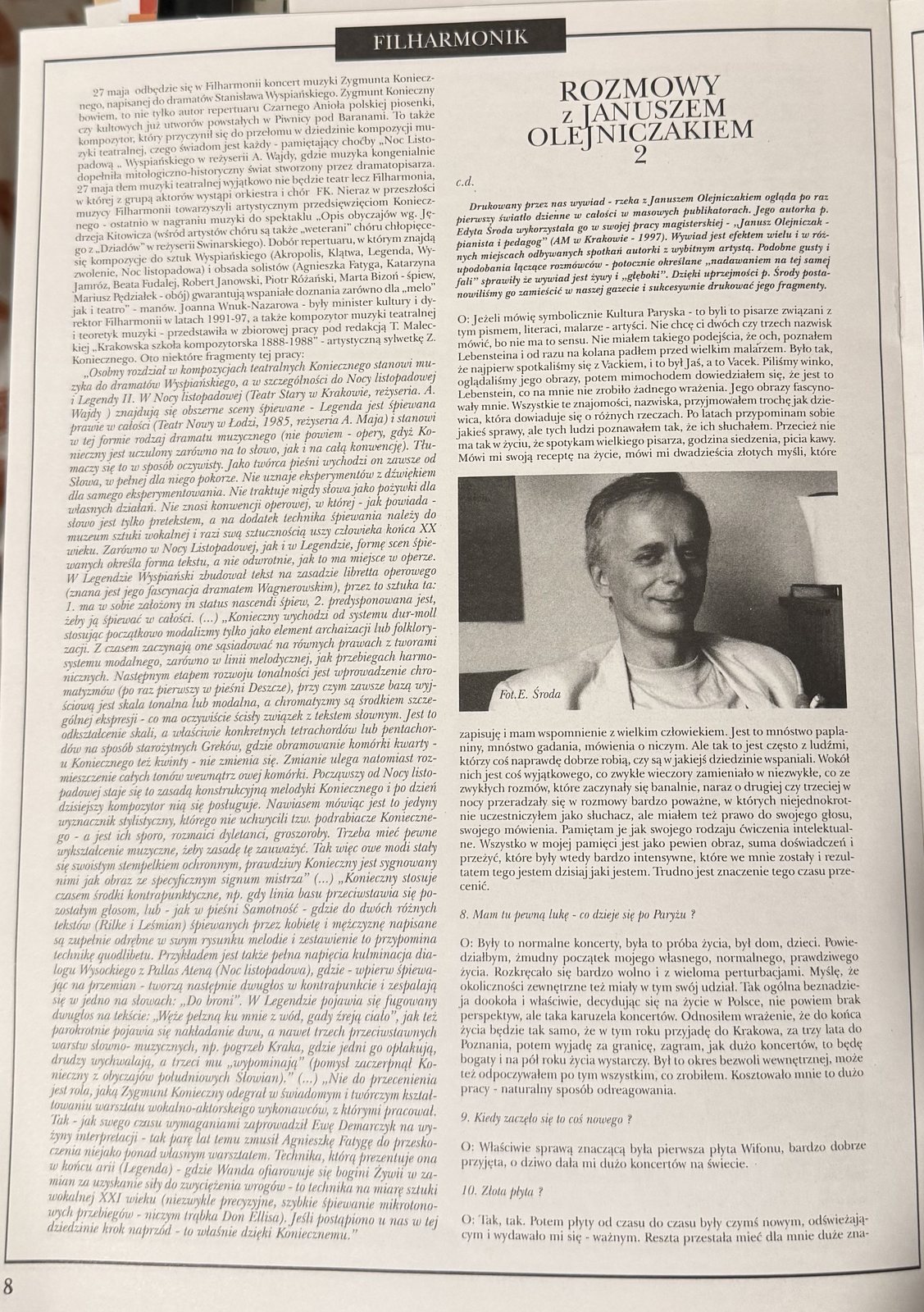
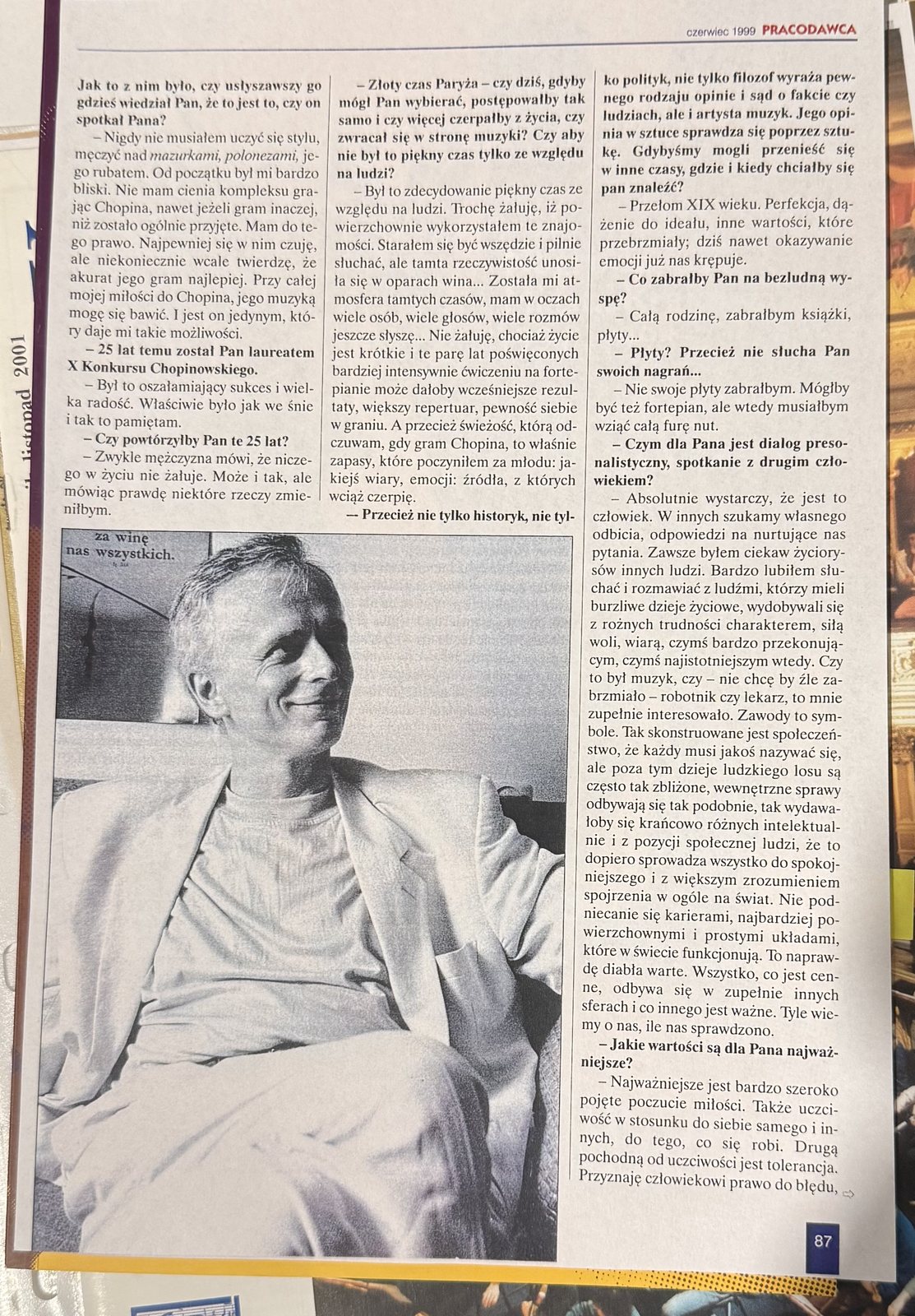
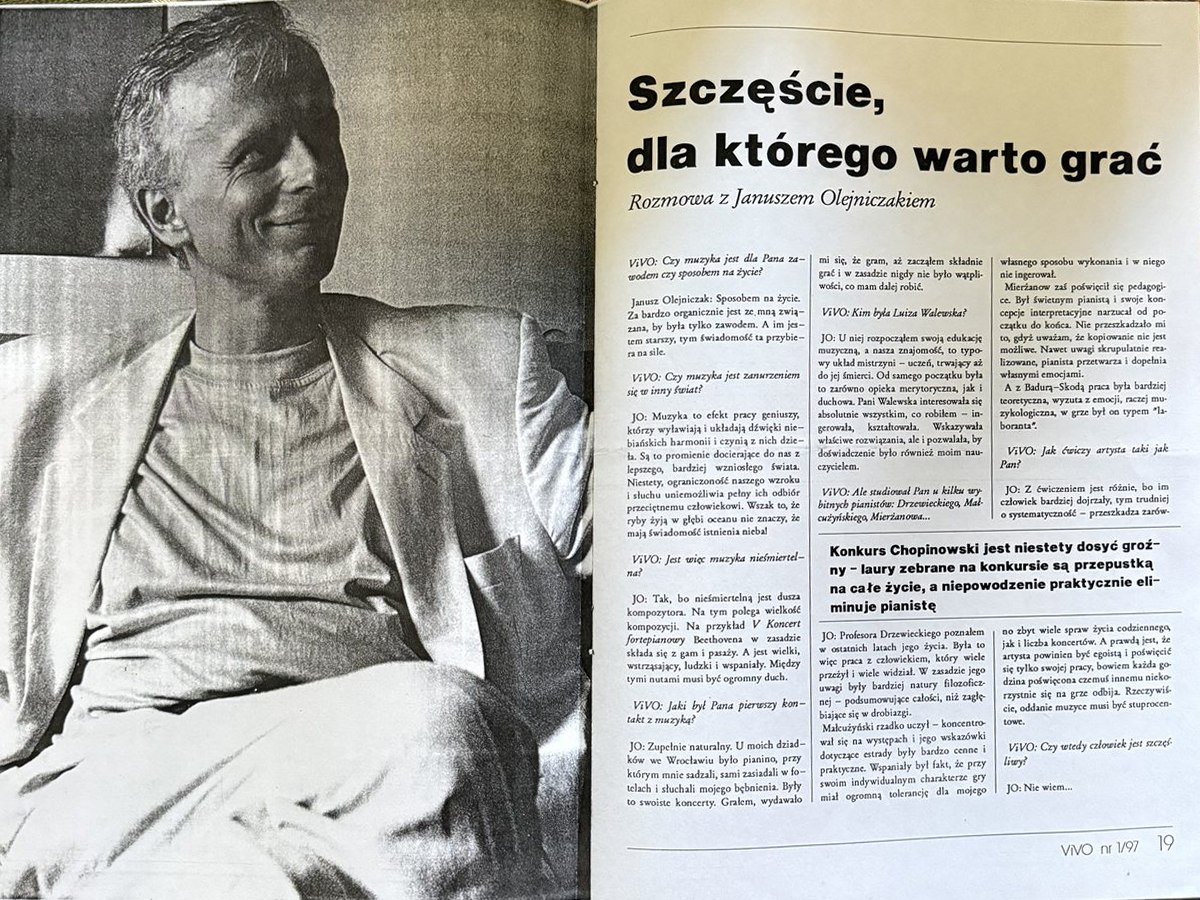
Kraków · 1998
City of Kraków Award — not a footnote, but a chapter in its own right
The City of Kraków Awards also include distinctions for graduates of Kraków’s higher-education institutions for diploma works of particular value. The official register of recipients lists Edyta Środa from the Academy of Music and the title ‘Janusz Olejniczak — pianista i pedagog’.
This is the city’s confirmation of the significance of the dissertation and its place in Edyta’s body of work. See the official register of recipients in the Public Information Bulletin of the City of Kraków.
OFFICIAL TITLE OF THE DISSERTATION
„Janusz Olejniczak — pianista i pedagog”
Edyta Środa · Academy of Music · City of Kraków Award 1998
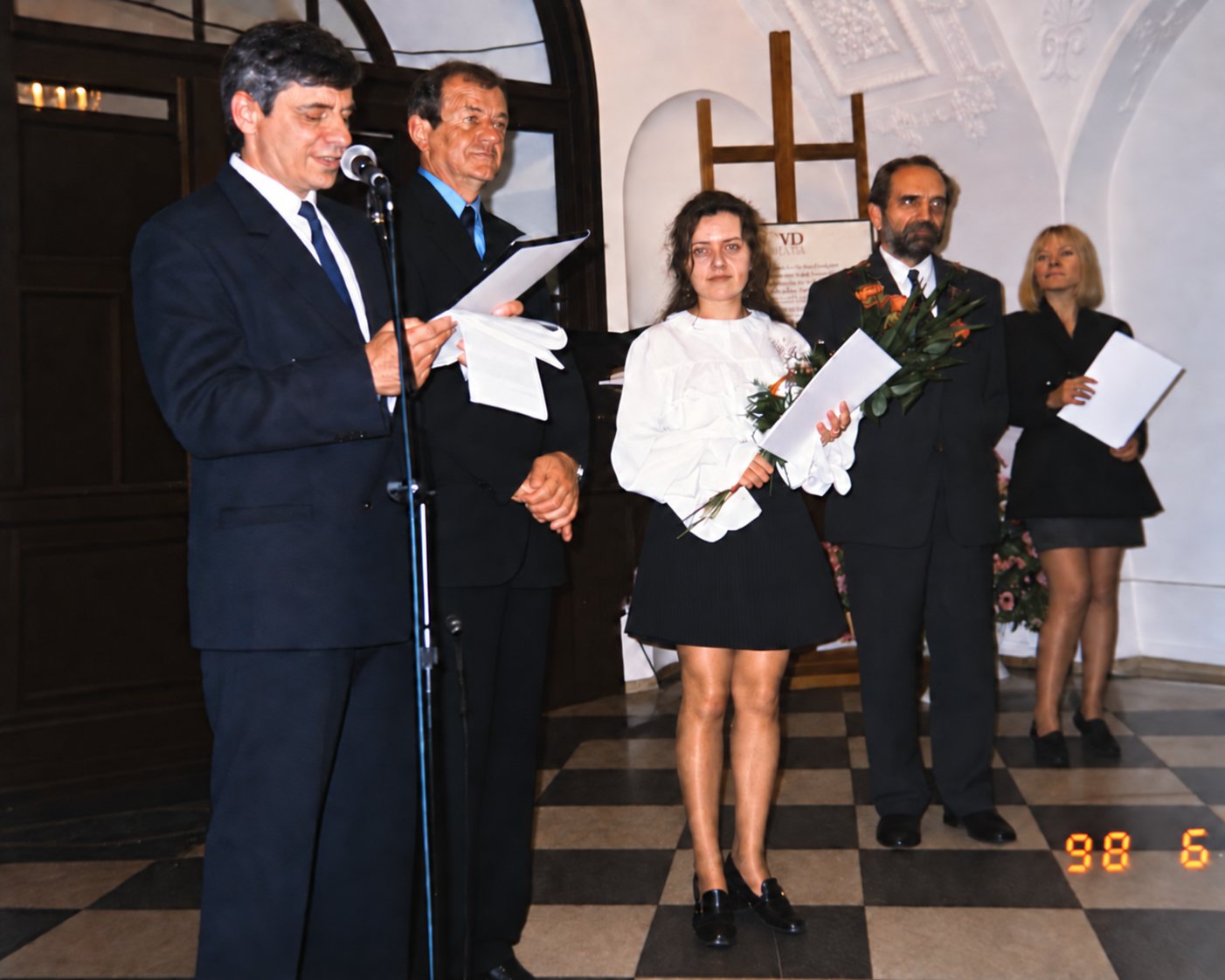
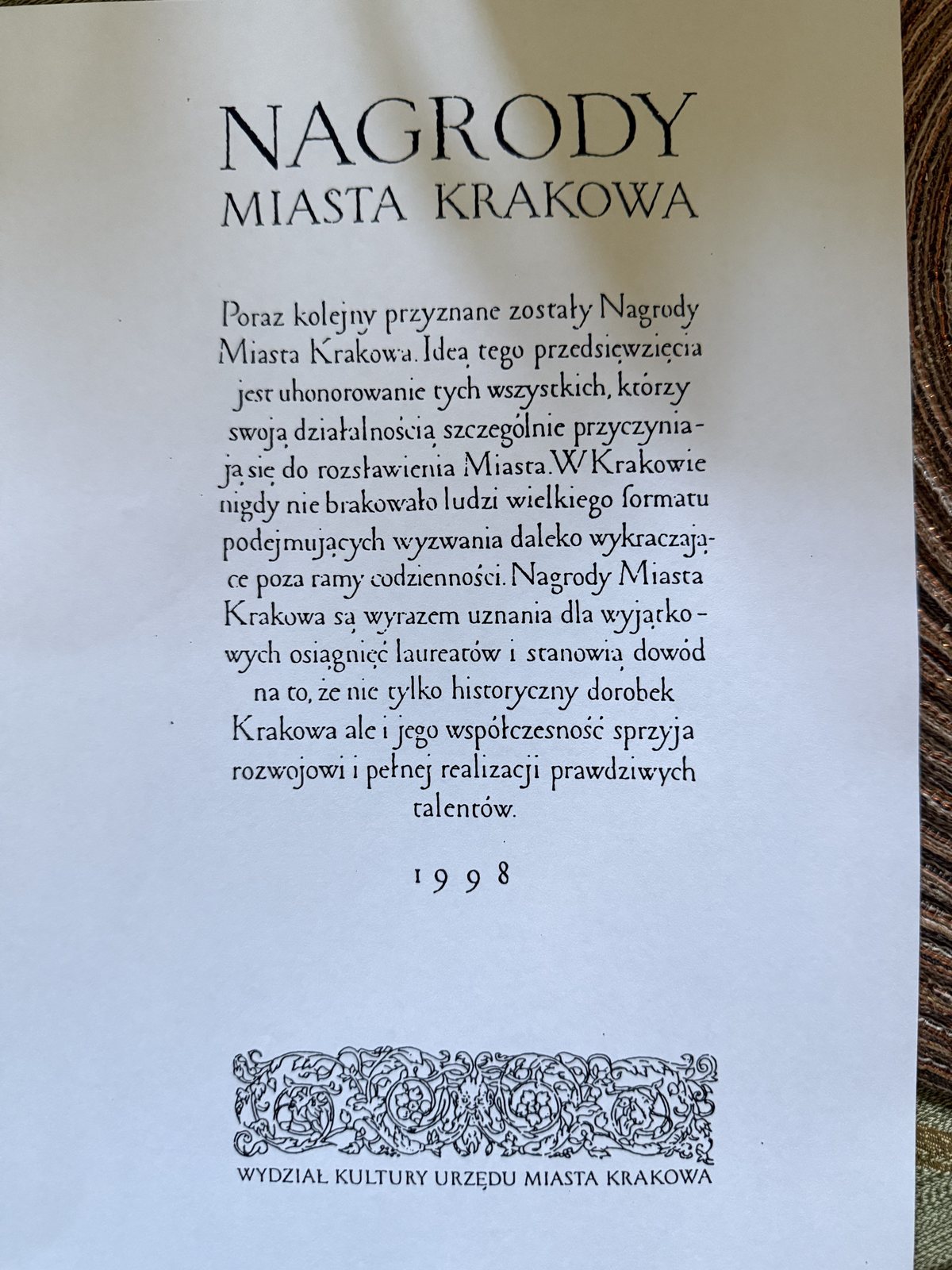
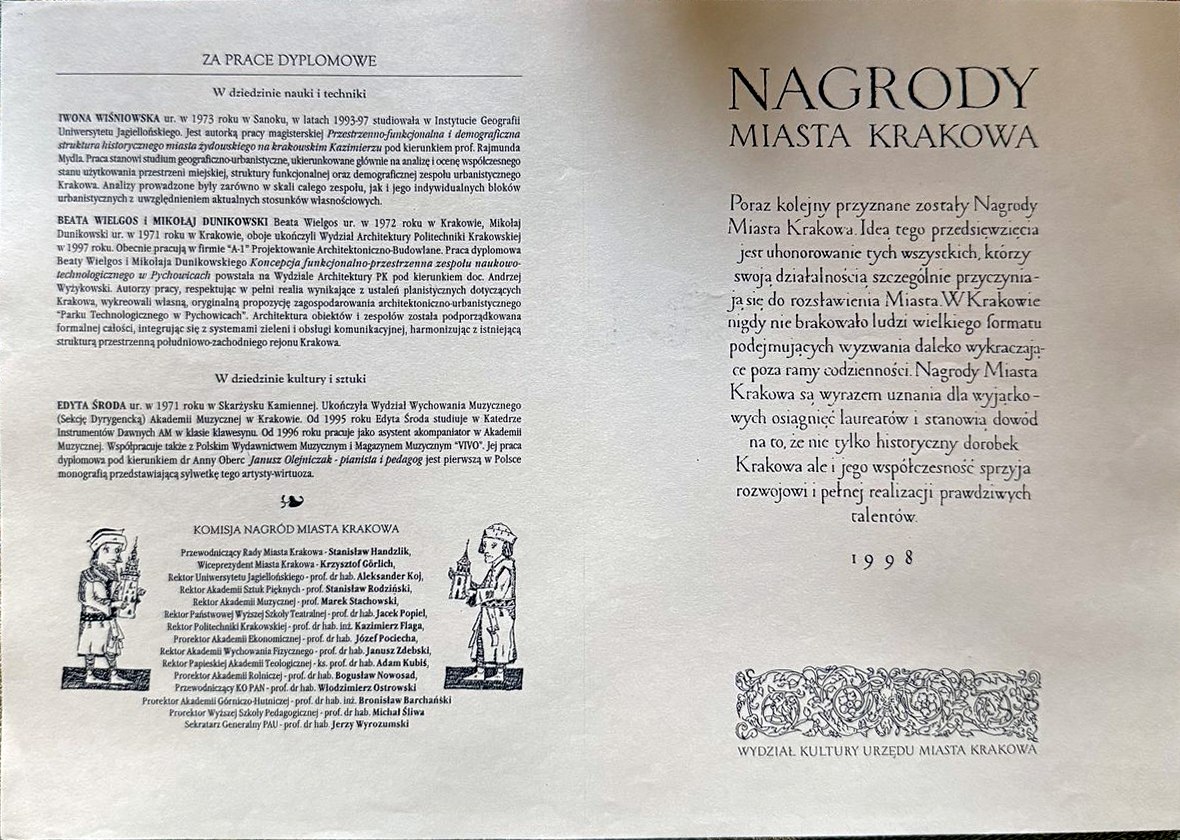
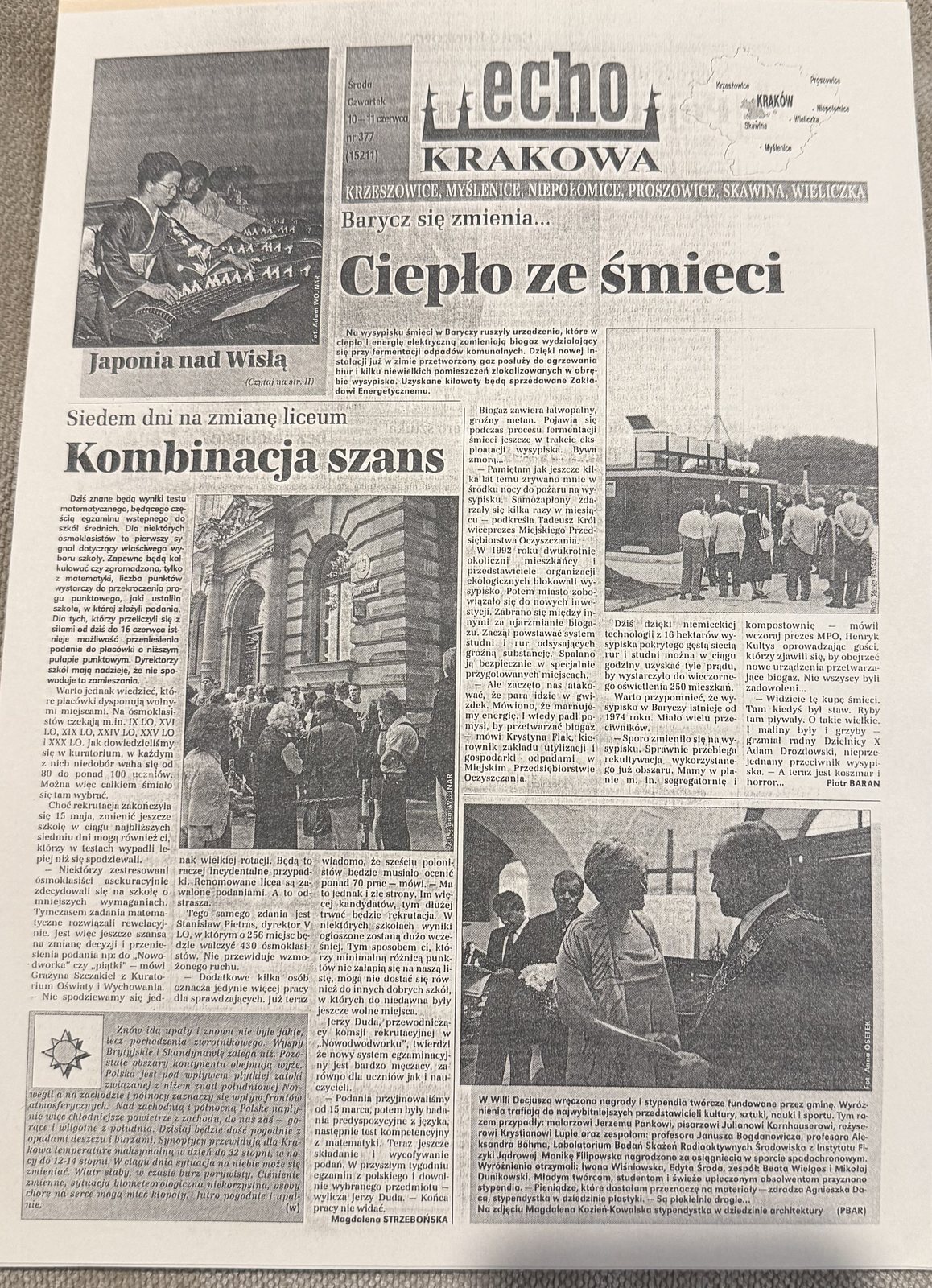
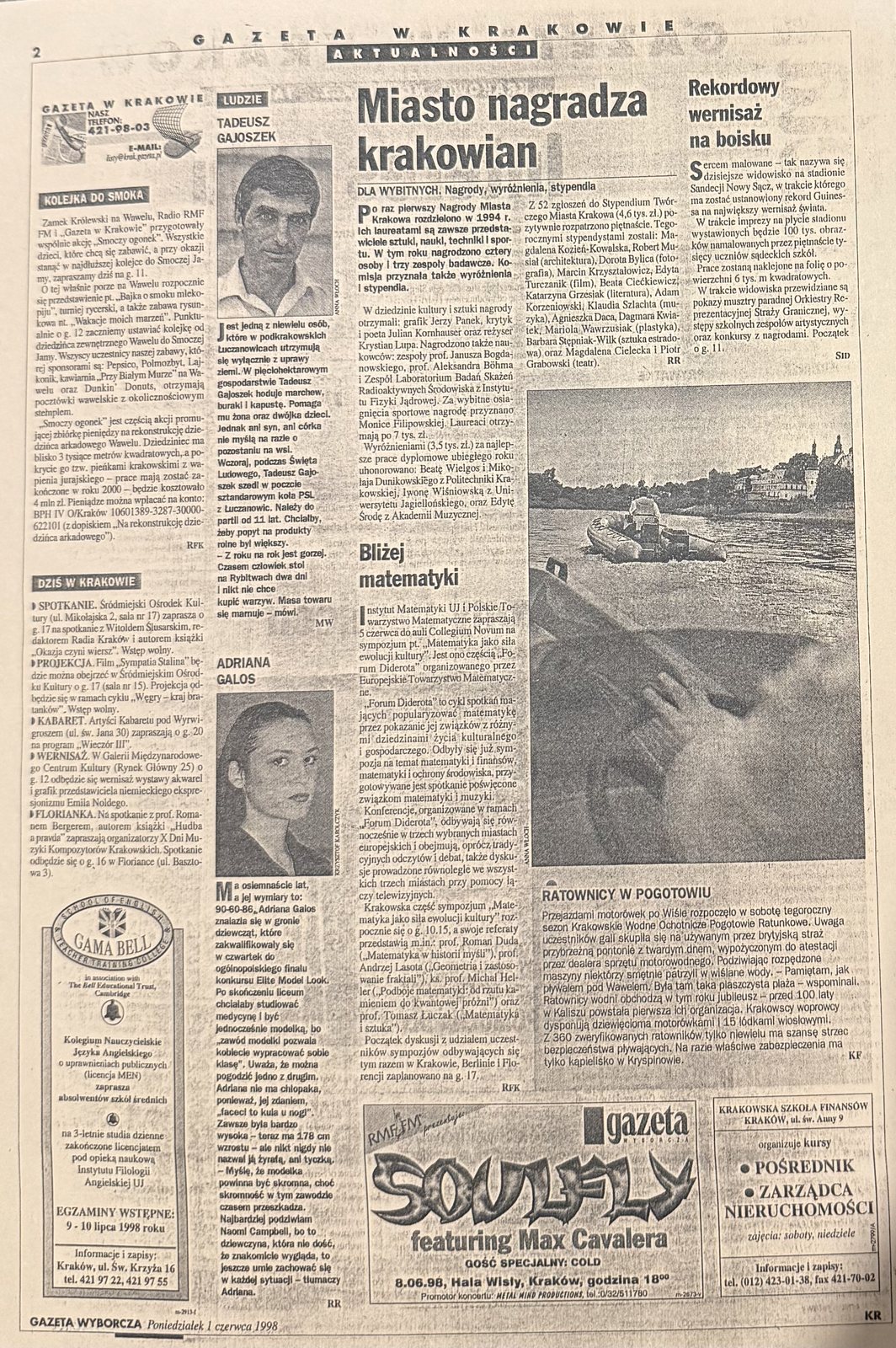
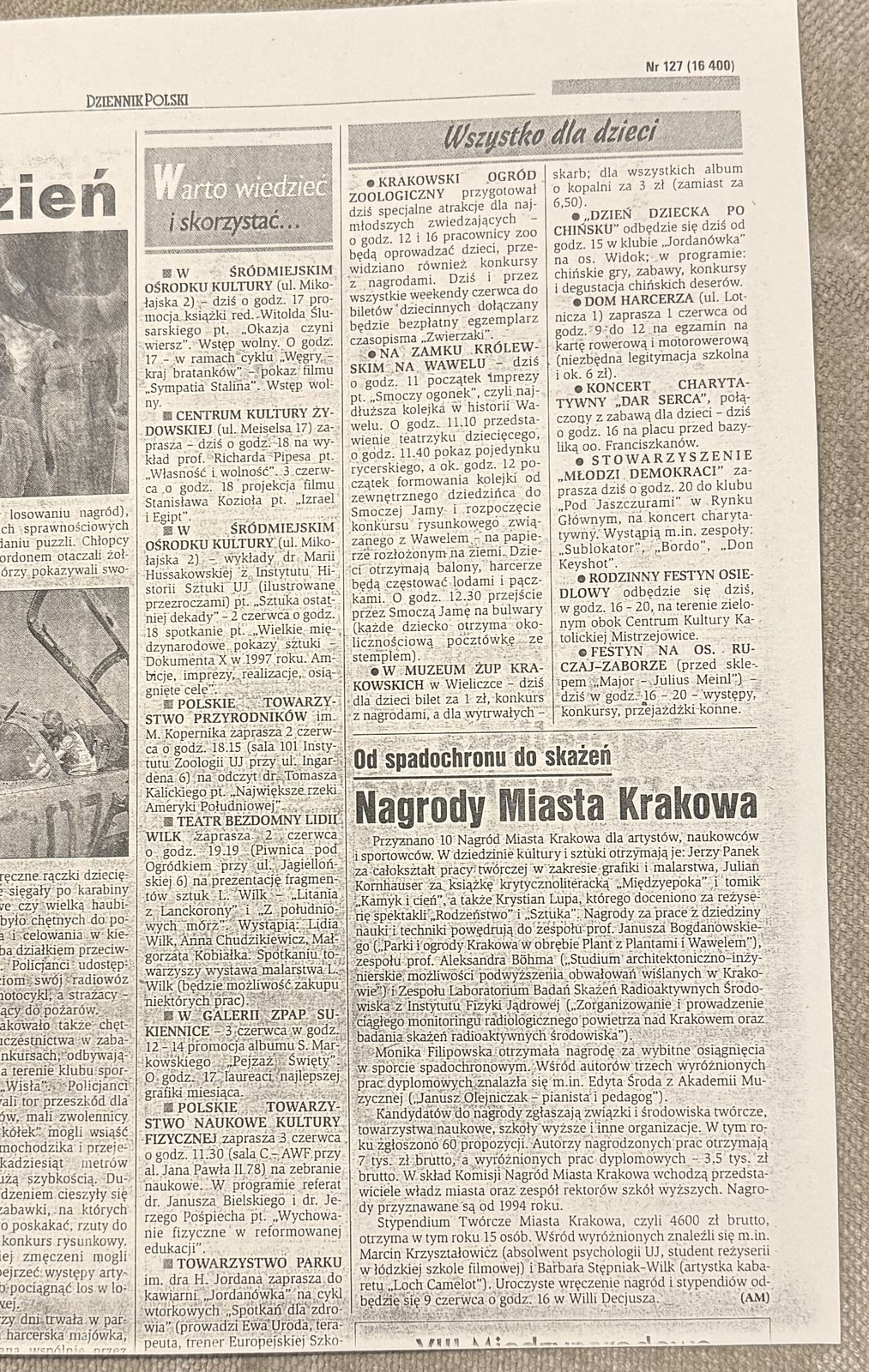
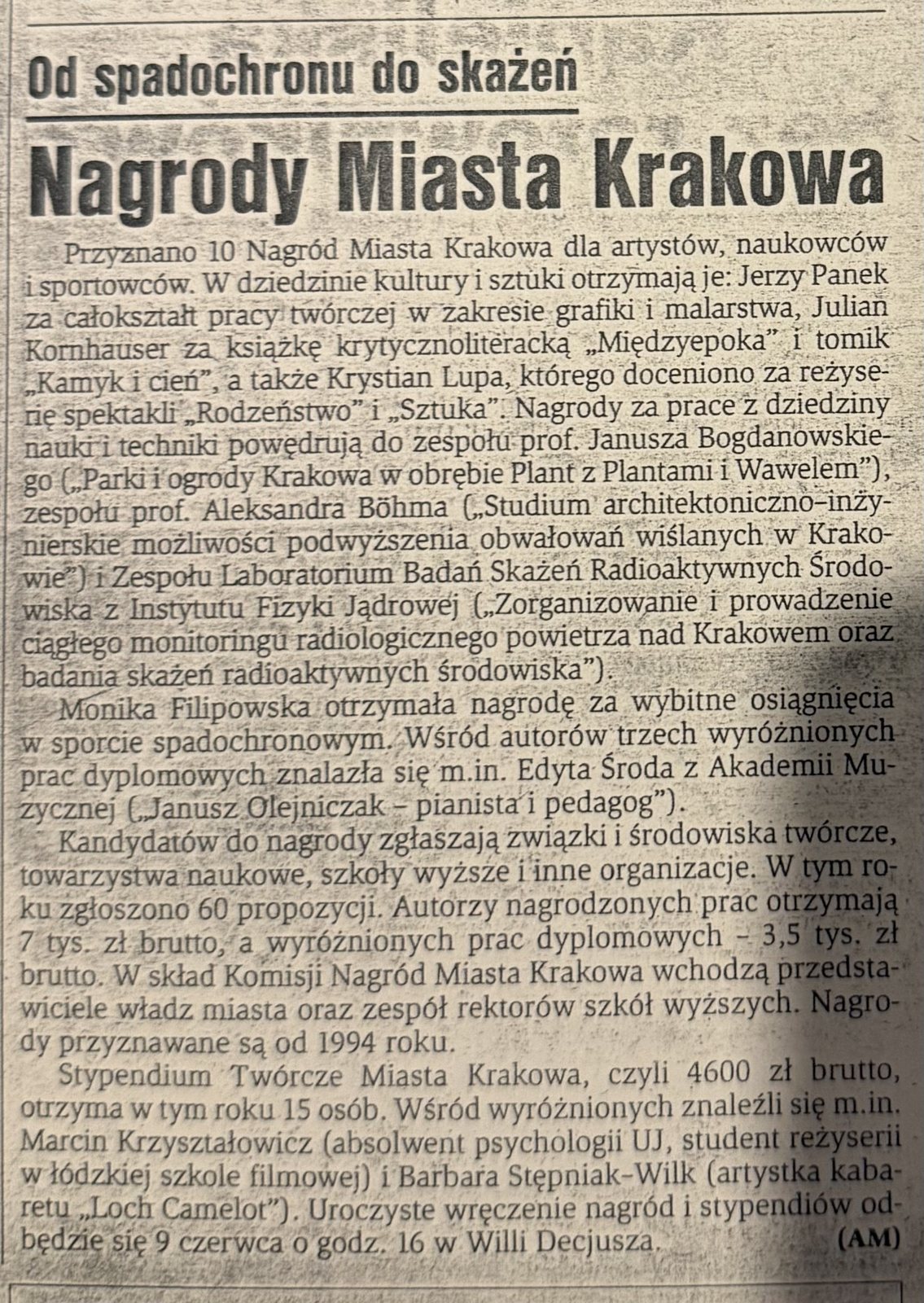
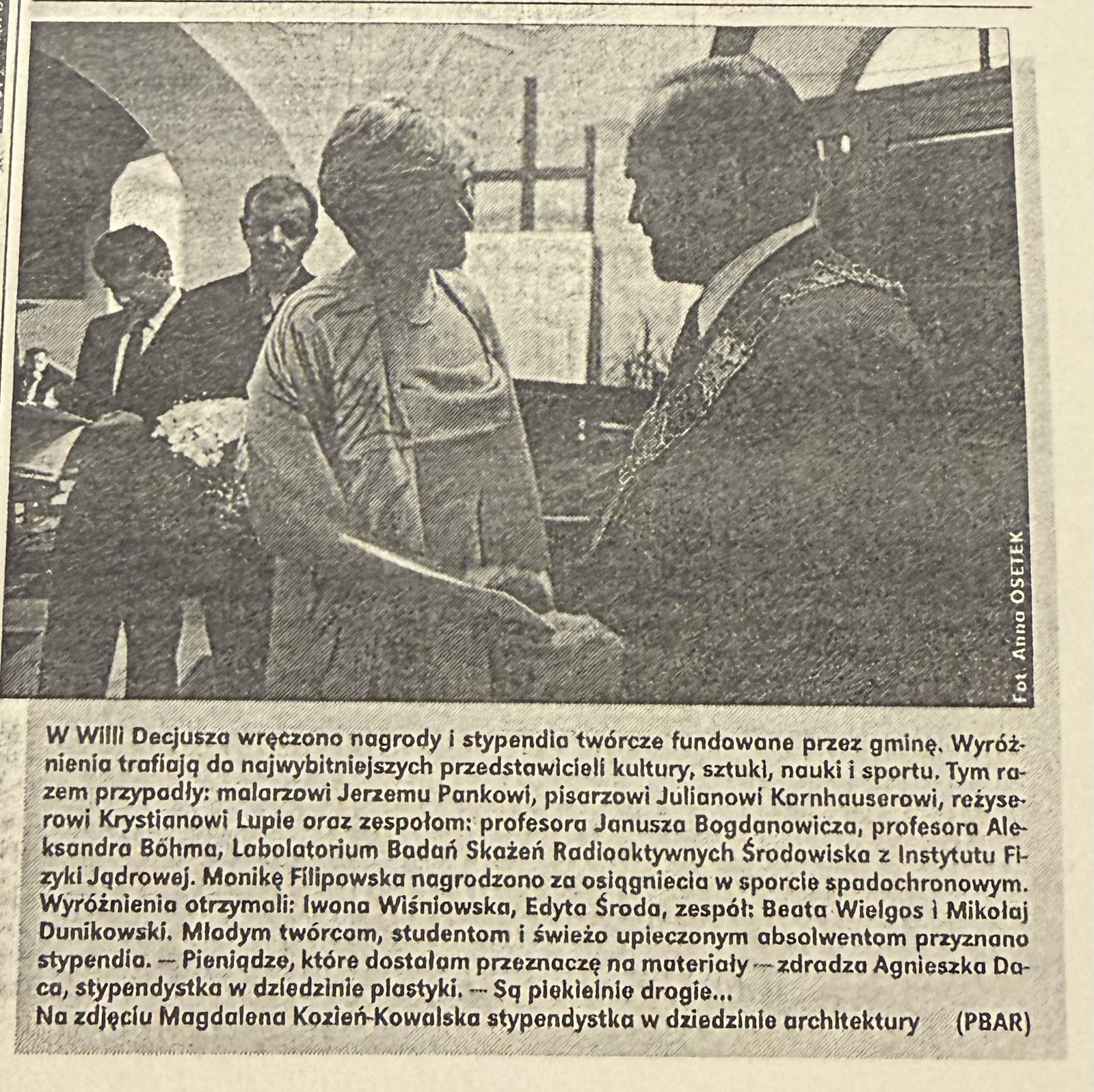
Complete documentation of the event has survived in the archive: the original award document, a brochure published by the city, a photograph from the ceremony and several independent press reports. Together they show not only the distinction itself, but also the public and institutional context in which Edyta’s dissertation was recognised.
The document bears her name, the title of the study, the Academy of Music and the date of 9 June 1998. The handwritten signature has been permanently removed from the online copy only; the original remains untouched in the archive.
The press reports place Edyta among those honoured for scholarly, artistic and creative achievements. By bringing together several sources, the reader can see the event not as a single mention in a CV, but as a documented moment in her journey.
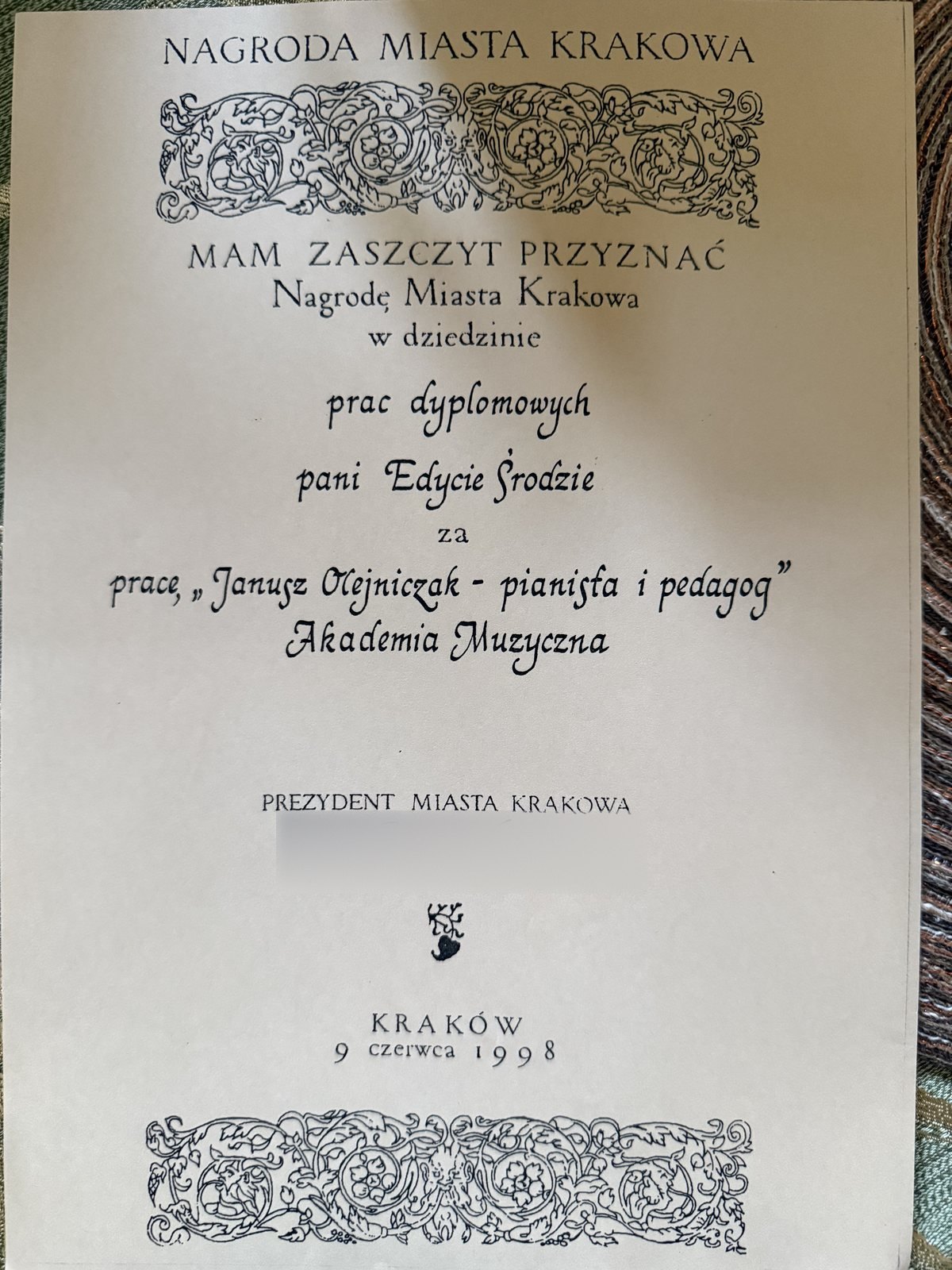
The award in the press
Five surviving reports — five different perspectives on the same event
Germany
Concert reviews and a presence in musical life
Materials from Karlsruhe, Flensburg and other places show Edyta both as a soloist and as a partner in early-music ensembles. They are not merely a chronicle of concerts: they record repertoire, performing forces, the character of the events and the way critics perceived her playing within the ensemble as a whole.
The reviews repeatedly address matters of particular importance to historically informed performance — conscious agogics, ornamentation, phrasing, rhythmic resilience and the ability to differentiate the character of successive movements. The harpsichord does not appear here as a discreet background element, but as an instrument that carries the narrative, enters into dialogue with a second harpsichord or helps create the ensemble’s sound.
The archive also reveals the breadth of this activity: from music by J.C.F. Fischer, Johann Mattheson, J.S. Bach and Johann Ludwig Krebs to the first performance of a work by Raimo Kangro and the musical setting for an event devoted to early printed books. It is a portrait of an Artist present at the same time in concert practice, the academic community and the life of cultural institutions.
27–28 October 2001
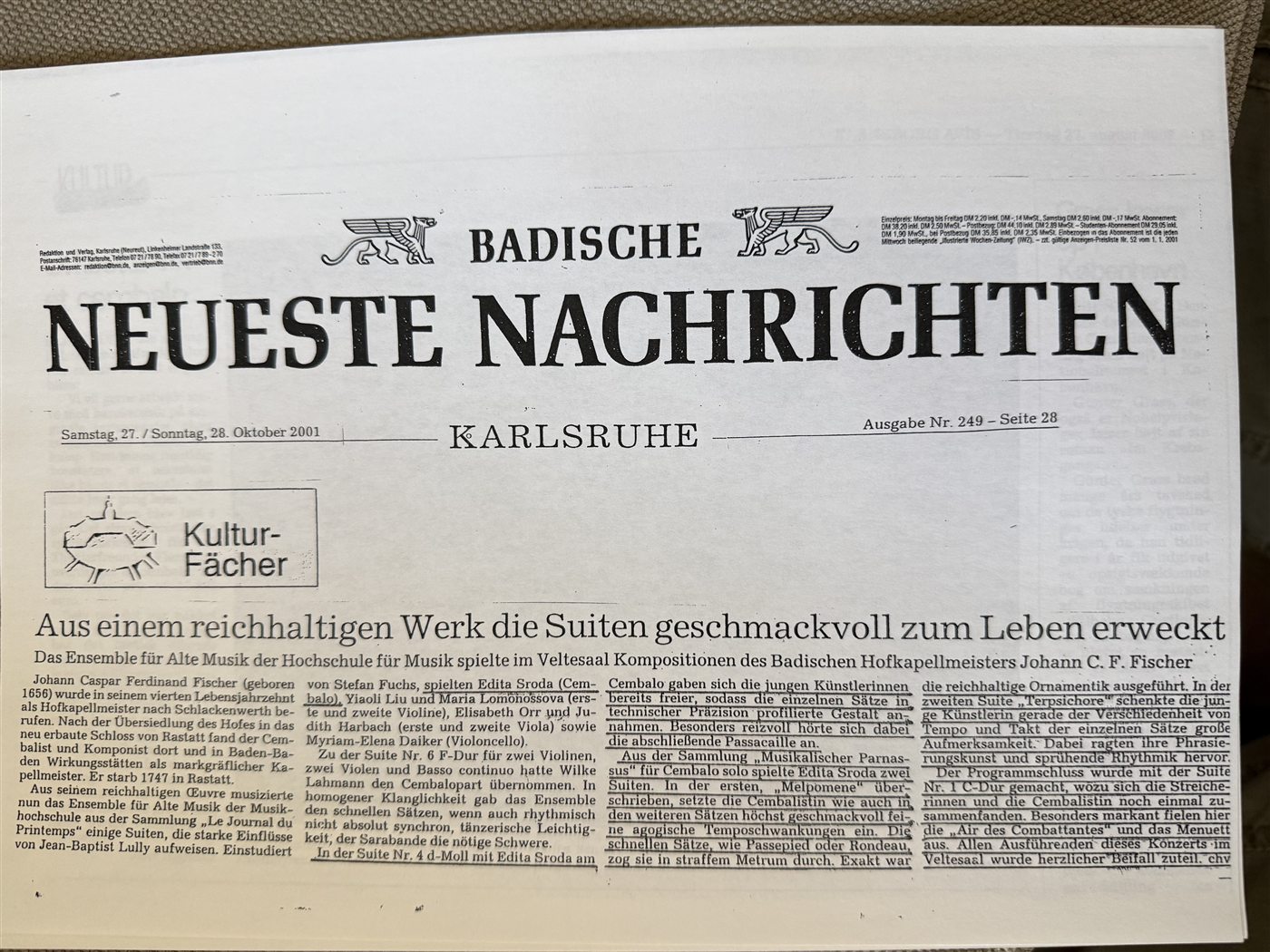
J.C.F. Fischer’s suites brought tastefully to life
The review describes a concert by the Ensemble für Alte Musik of the Hochschule für Musik Karlsruhe in the Veltesaal, devoted to the music of Johann Caspar Ferdinand Fischer — Kapellmeister at the court of Baden and an important representative of the German Baroque.
Edyta performed in the ensemble pieces and also appeared as a soloist in two suites from the ‘Musicalischer Parnassus’ cycle. The author drew attention to the wealth of ornamentation, rhythmic freedom and subtle agogic fluctuations through which each dance acquired its own character.
The description of precise phrasing and lively rhythm reveals an interpretation in which stylistic awareness does not mean rigidity. Fischer’s music was presented as a rhetorically varied narrative rather than a museum record of historical dance forms.
Badische Neueste Nachrichten · Karlsruhe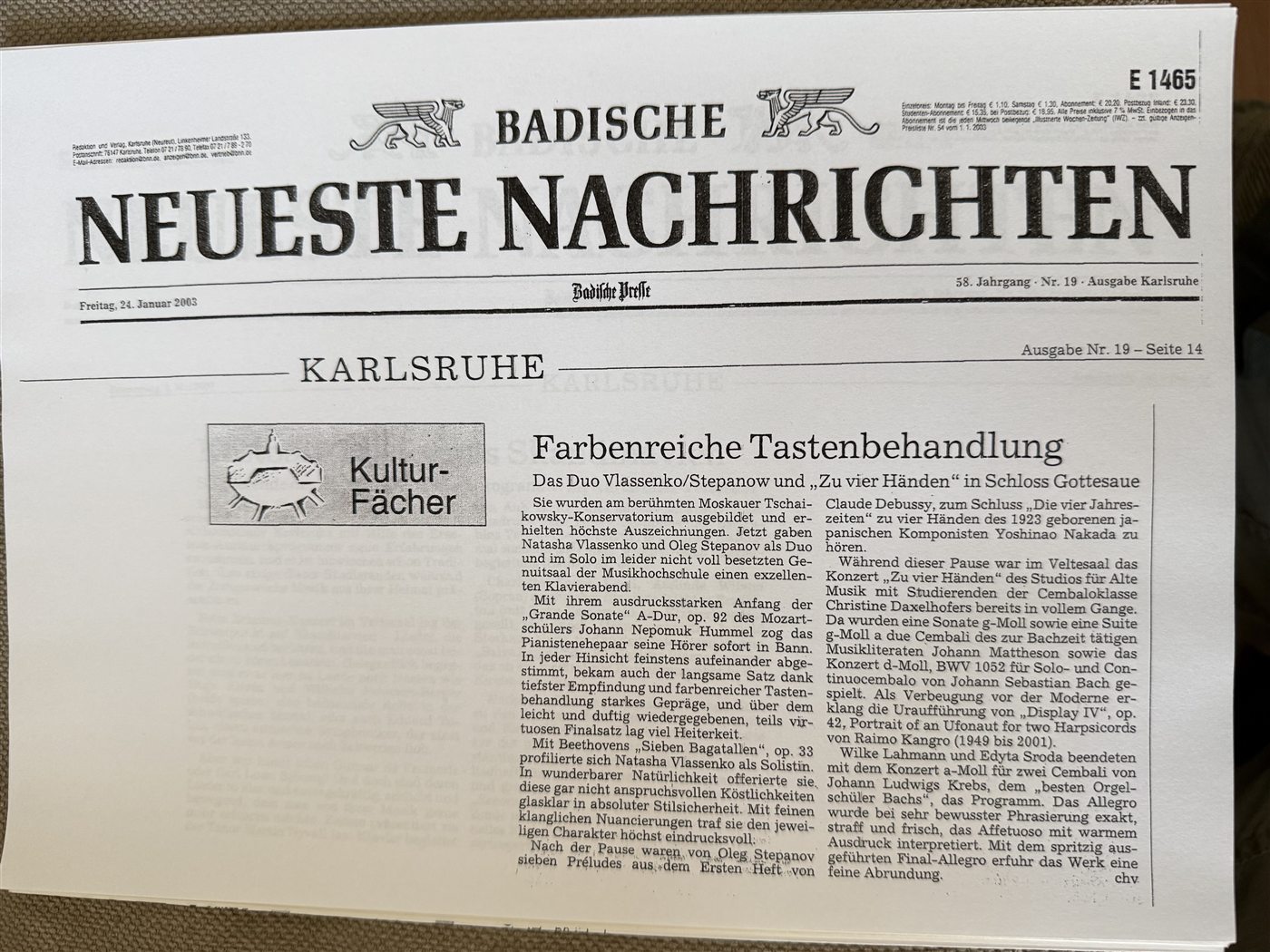
24 January 2003
Concerto for two harpsichords
The article reports on an extensive evening at Schloss Gottesaue during which, alongside piano repertoire, a programme by students from Christine Daxelhofer’s harpsichord class was performed. It included music by Johann Mattheson and J.S. Bach, as well as a contemporary work by Raimo Kangro for two harpsichords.
The finale of this part of the programme was Johann Ludwig Krebs’s Concerto in A minor for two harpsichords, performed by Edyta Środa and Wilke Lahmann. The critic noted precision, freshness and highly conscious phrasing in the Allegro, the warm expression of the Affettuoso and the lightness of the closing movement.
The review therefore documents not only a single performance, but also the stylistic flexibility of both harpsichordists: from eighteenth-century polyphony and concertante dialogue to twentieth-century music written for historical instruments.
Badische Neueste Nachrichten · Karlsruhe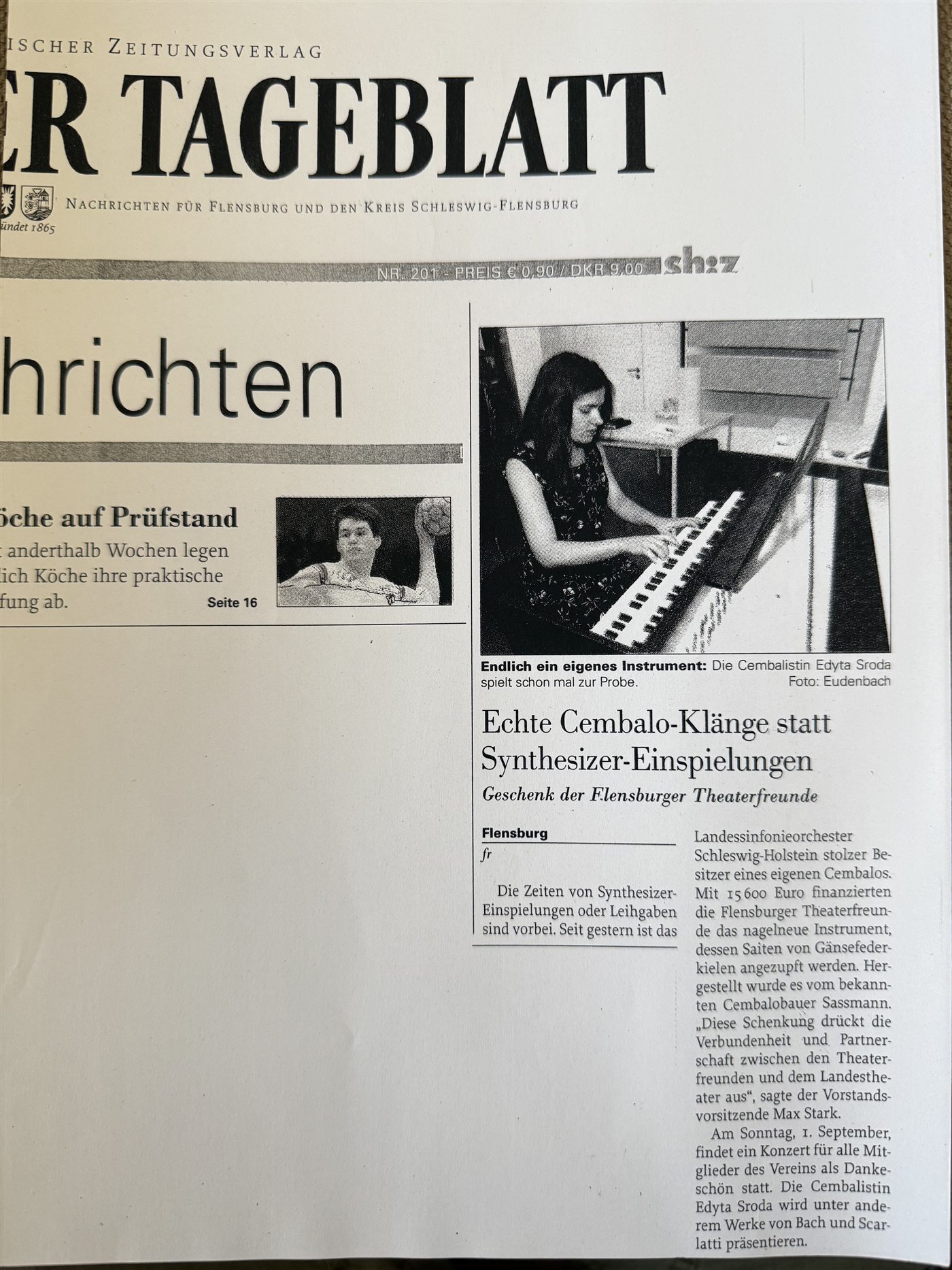
2002
Authentic harpsichord sound
The material presents an important moment in the life of the Landessinfonieorchester Schleswig-Holstein: the acquisition of its own harpsichord, funded by the friends of the theatre association. The newspaper emphasised that, from then on, harpsichord parts no longer had to be replaced by a synthesiser sound or by an instrument hired only for an individual event.
Edyta was photographed rehearsing at the new instrument and announced as the Artist who would present its possibilities to the public. The programme included music from the seventeenth and eighteenth centuries, including works by Bach and Scarlatti.
This article shows her role as broader than participation in the concert alone: she was entrusted with introducing the new instrument musically into the orchestra’s practice and giving the first public presentation of its authentic timbre.
Flensburger Tageblatt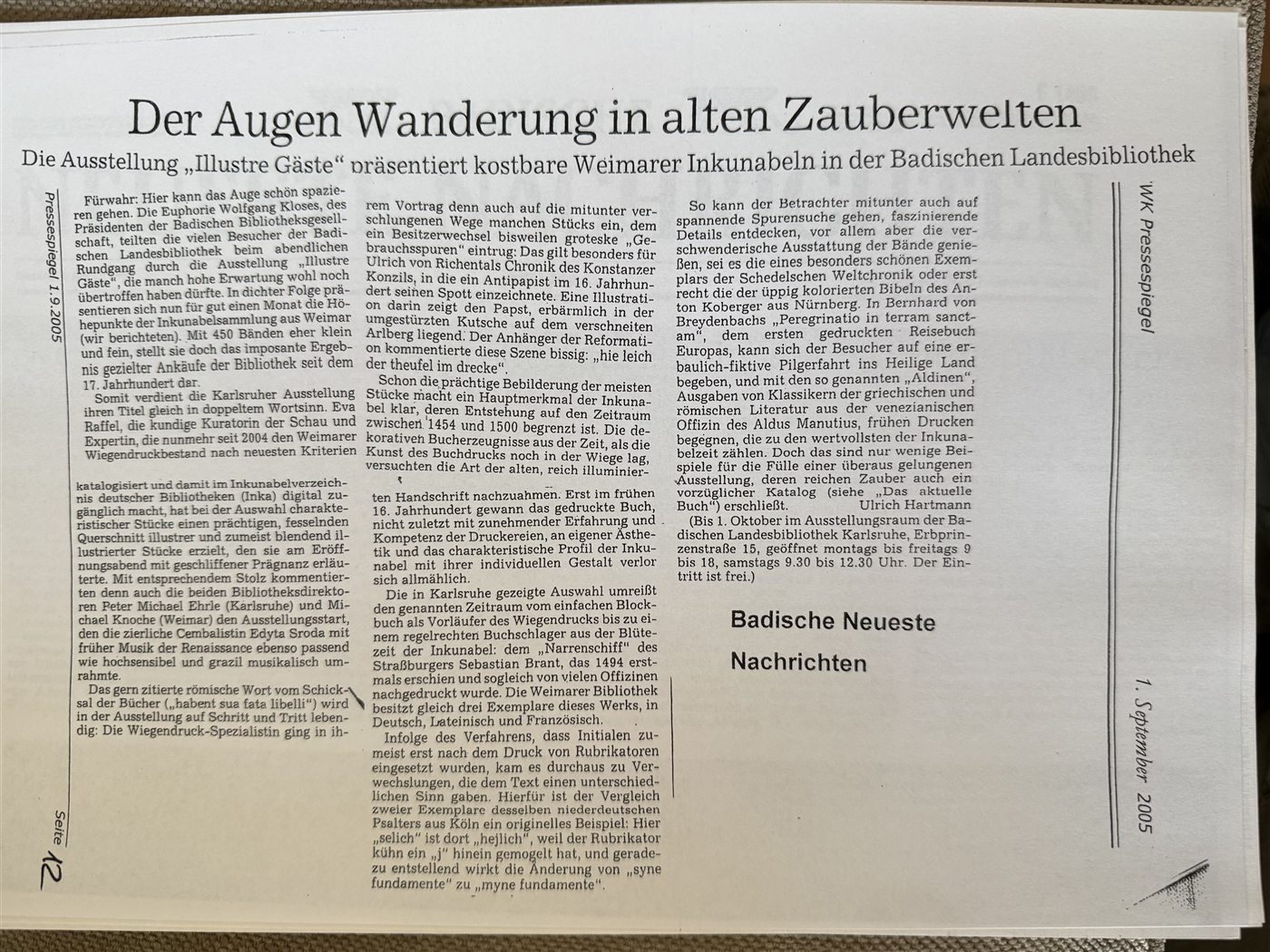
1 September 2005
Music for the world of early printed books
The report concerns the opening of the ‘Illustre Gäste’ exhibition at the Badische Landesbibliothek, presenting valuable incunabula and early printed books from Weimar. The article guides the reader through the world of historical typography, illustration, hand decoration and the transformation of the book at the dawn of the modern era.
Edyta created the musical setting for the inauguration, selecting Renaissance music performed on the harpsichord for the library space. Her presence combined the viewing of historic books with an auditory experience of the period, without competing with the event’s principal subject.
The material is an important example of activity at the intersection of the arts: it demonstrates the ability to build historical context and create a programme in which music becomes a natural commentary on material heritage.
Badische Neueste Nachrichten · KarlsruheArchive of earlier PDFs
Sixteen traces in the press — reviews, announcements and a chronicle of events
Hover over a thumbnail or give it keyboard focus to enlarge it
Full newspaper scans require the publisher’s permission
 archival thumbnail
Badische Neueste Nachrichten
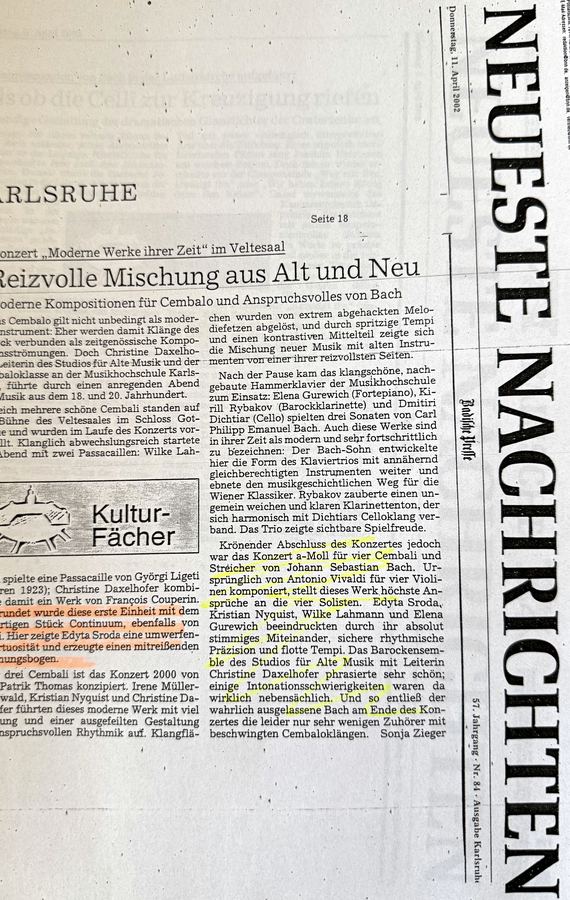
„Reizvolle Mischung aus Alt und Neu”
A review documenting the encounter between early music and more recent repertoire, and Edyta’s presence as a performer.
 archival thumbnail
Badische Neueste Nachrichten
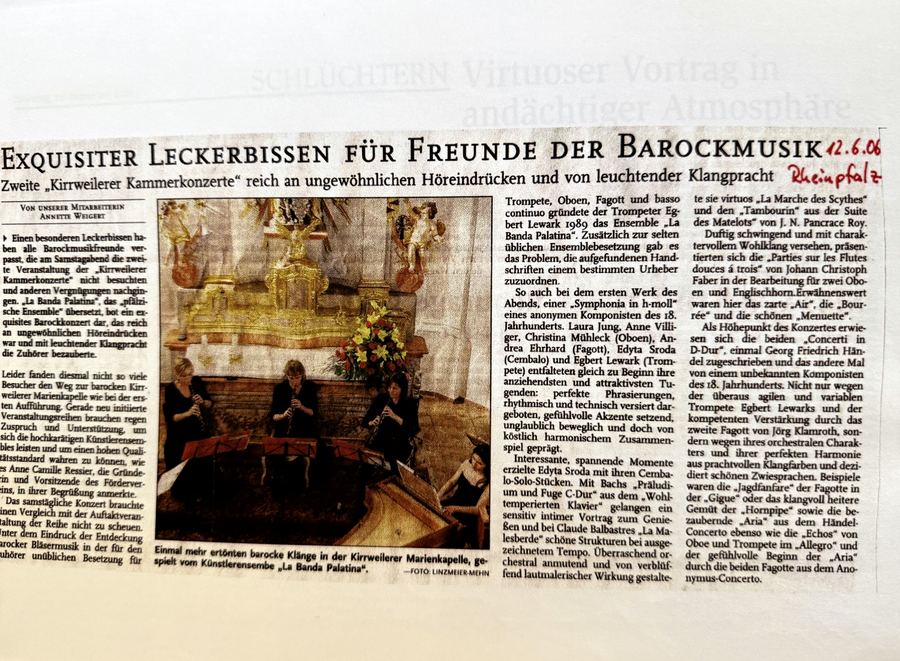
„Exquisite Leckerbissen für Freunde der Barockmusik”
Material devoted to a Baroque-music concert and ensemble work with harpsichord.
 archival thumbnail
Badische Neueste Nachrichten
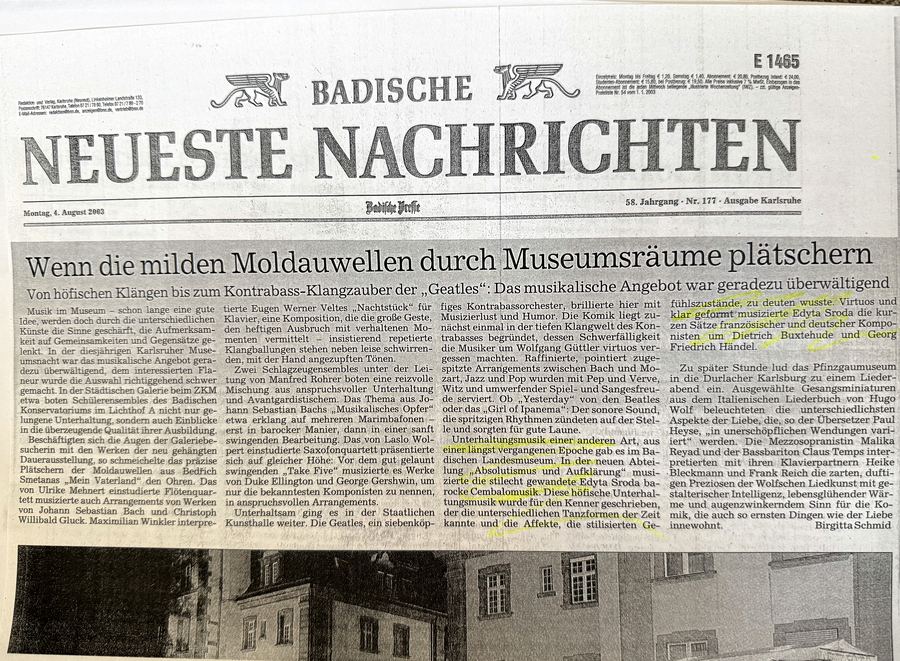
„Wenn die milden Moldauwellen...”
A press trace of a concert situated in a museum space and within an extensive artistic programme.
 archival thumbnail
Badische Neueste Nachrichten
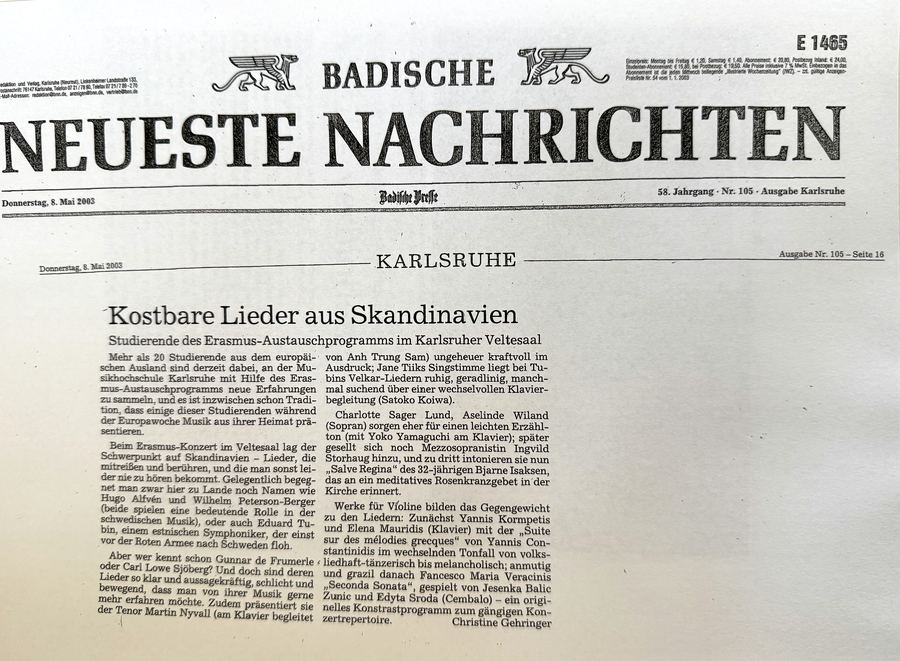
„Kostbare Lieder aus Skandinavien”
A review of a vocal-instrumental programme in which the harpsichord helped create the chamber texture of the sound.
 archival thumbnail
Badische Neueste Nachrichten
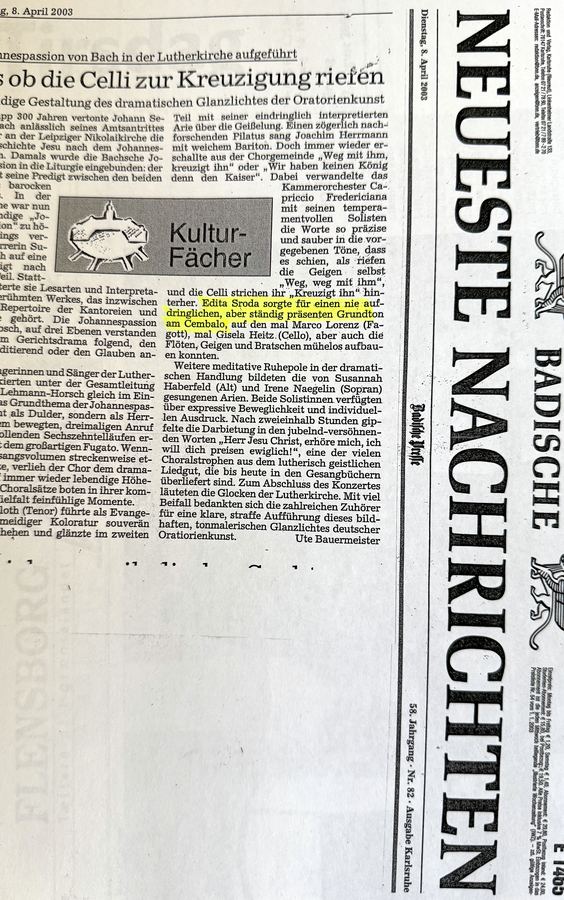
„Als ob die Celli zur Kreuzigung riefen”
Documentation of a larger concert event, showing Edyta within the broad context of musical life.
 archival thumbnail
Badische Neueste Nachrichten
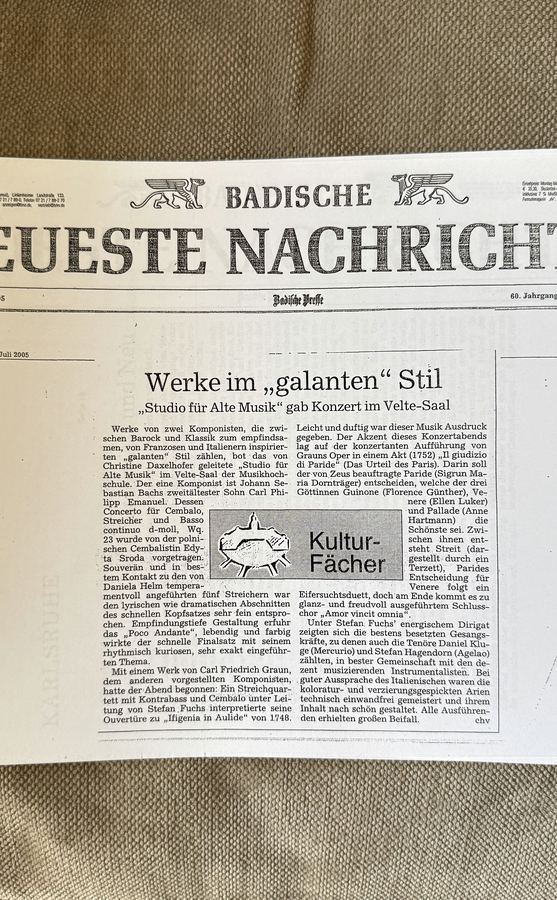
„Werke im galanten Stil”
A discussion of galant repertoire, stylistic practice and the role of historical instruments.
 archival thumbnail
Schlüchtern · 12 September 2006
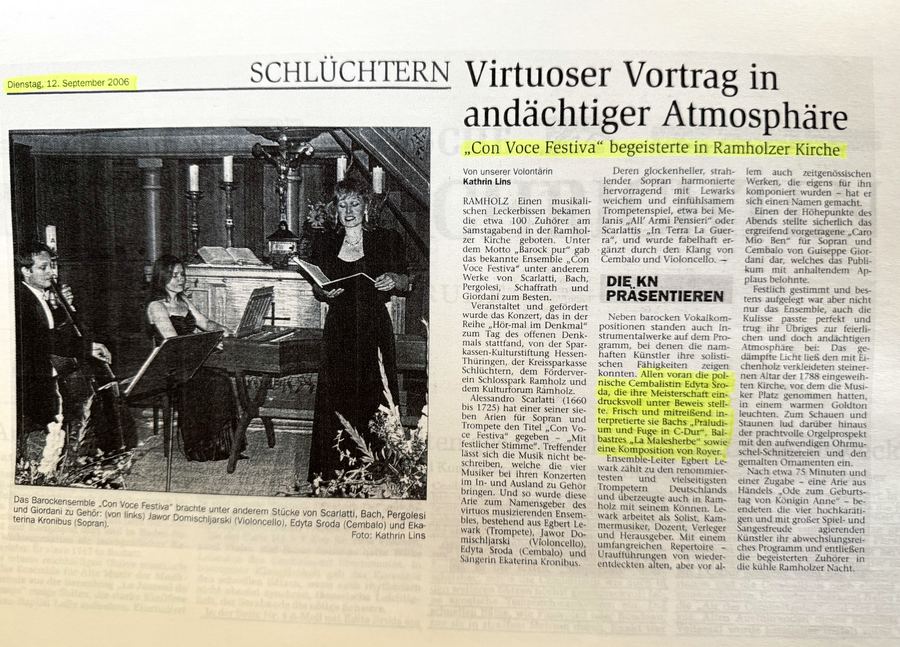
„Virtuoser Vortrag in andächtiger Atmosphäre”
A report from a Con Voce Festiva concert pointing to Edyta’s masterful playing and the diversity of the repertoire performed.
 archival thumbnail
Lippische Landes-Zeitung · 1993
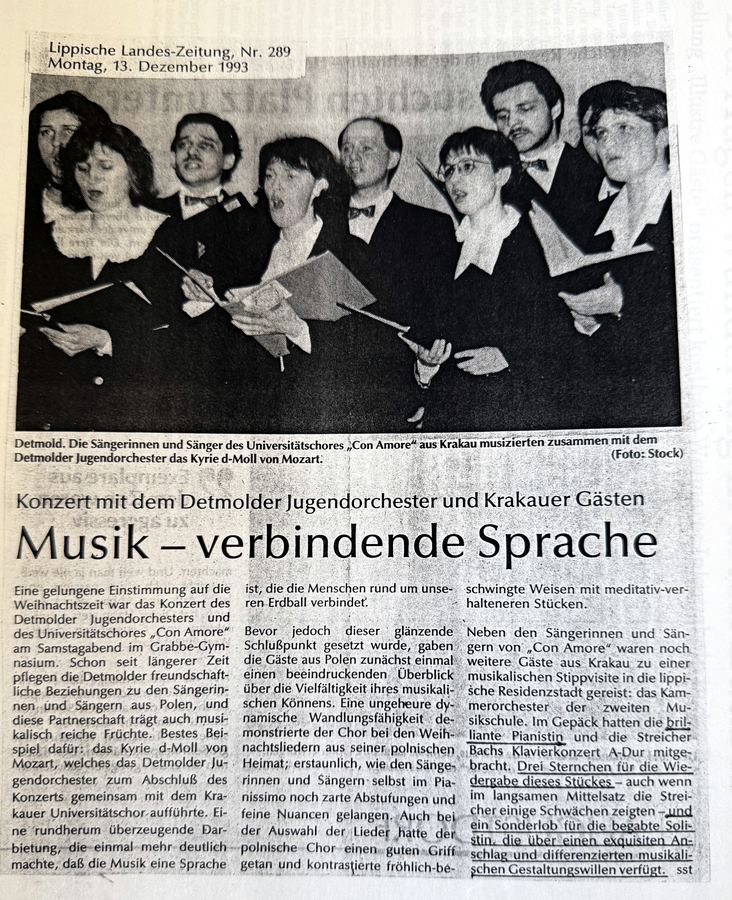
„Musik — verbindende Sprache”
An early item from the German press in which Edyta was noted as a pianist and soloist who had come from Kraków.
 archival thumbnail
Flensburger Tageblatt · 2002
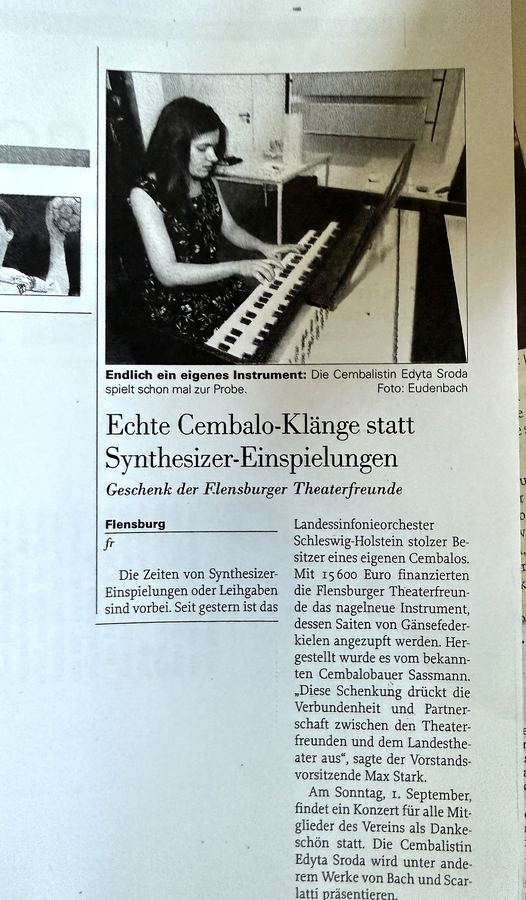
„Echte Cembalo-Klänge...”
An article about the orchestra’s new instrument and an announcement of Edyta’s presentation of music from the seventeenth and eighteenth centuries.
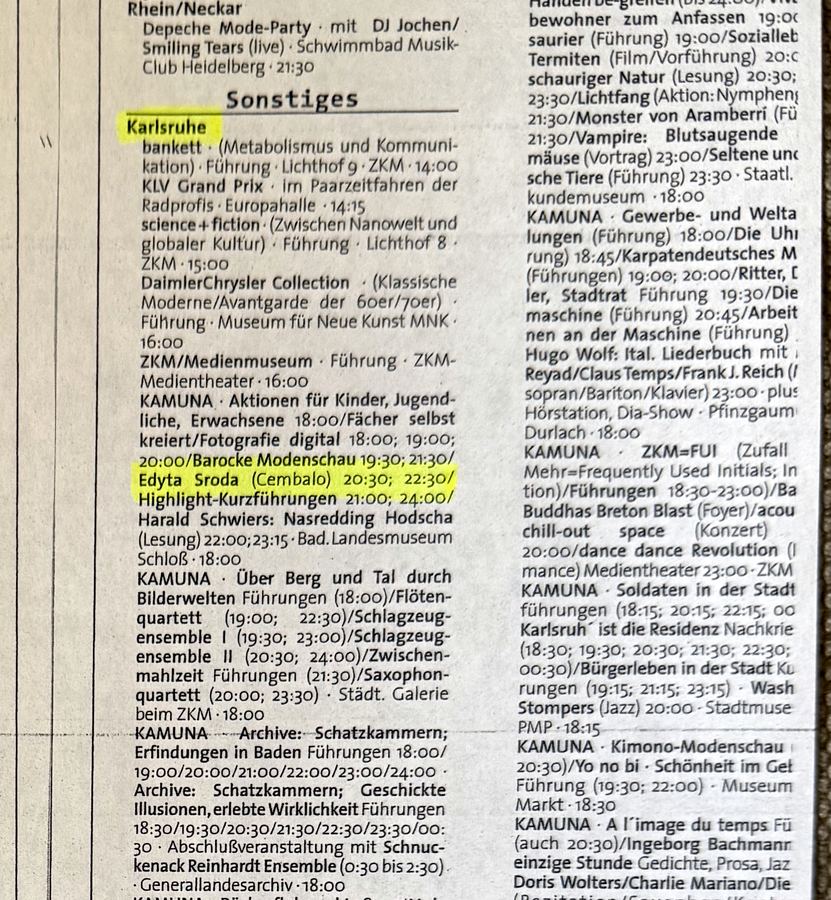 source excerpt
Karlsruhe · 2003
Edyta Środa in the cultural calendar
A short announcement of a harpsichord performance, preserved alongside extensive reviews as a trace of everyday concert life.
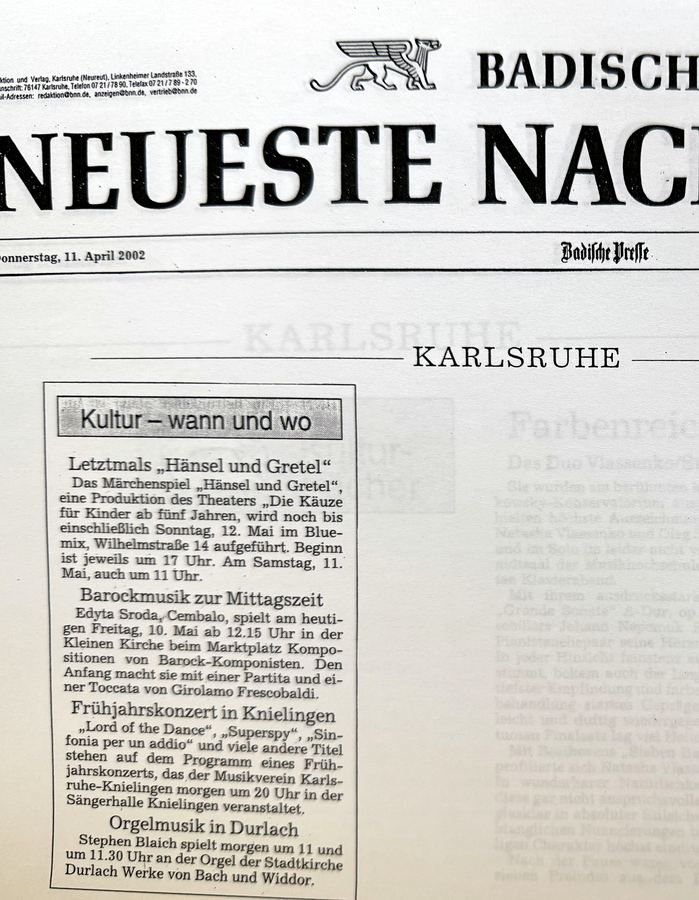 source excerpt
Badische Neueste Nachrichten
„Barockmusik zur Mittagszeit”
An announcement of a solo harpsichord programme featuring music by Baroque composers.
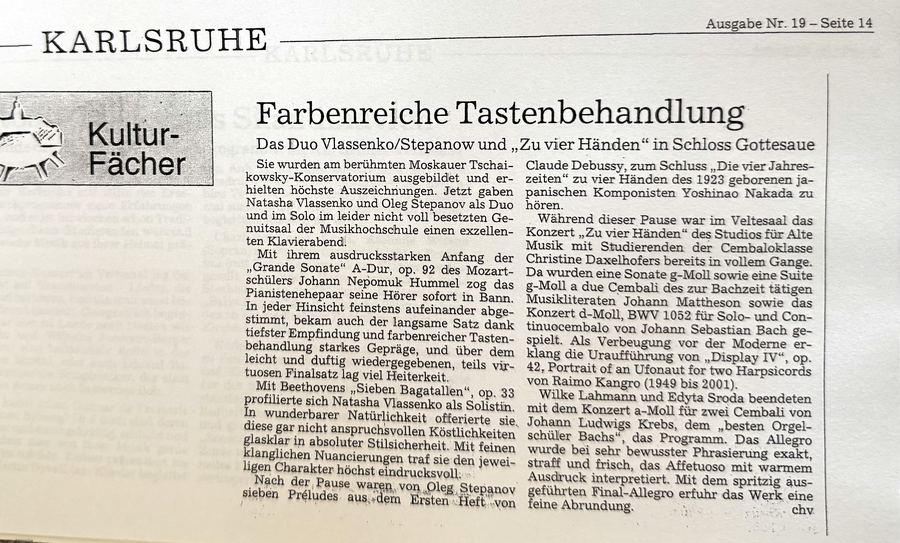 archival thumbnail
Badische Neueste Nachrichten · 2003
„Farbenreiche Tastenbehandlung”
A review of a concert for two harpsichords, drawing attention to phrasing, expression and the mutual shaping of the parts.
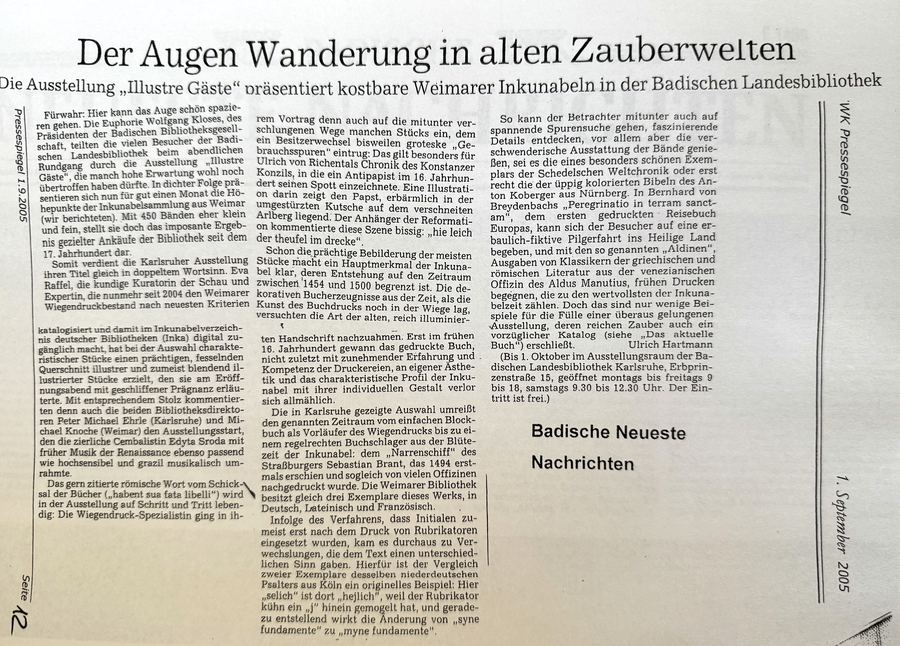 archival thumbnail
Badische Neueste Nachrichten · 2005
„Der Augen Wanderung in alten Zauberwelten”
A report from an exhibition of early printed books, whose opening Edyta accompanied with Renaissance music.
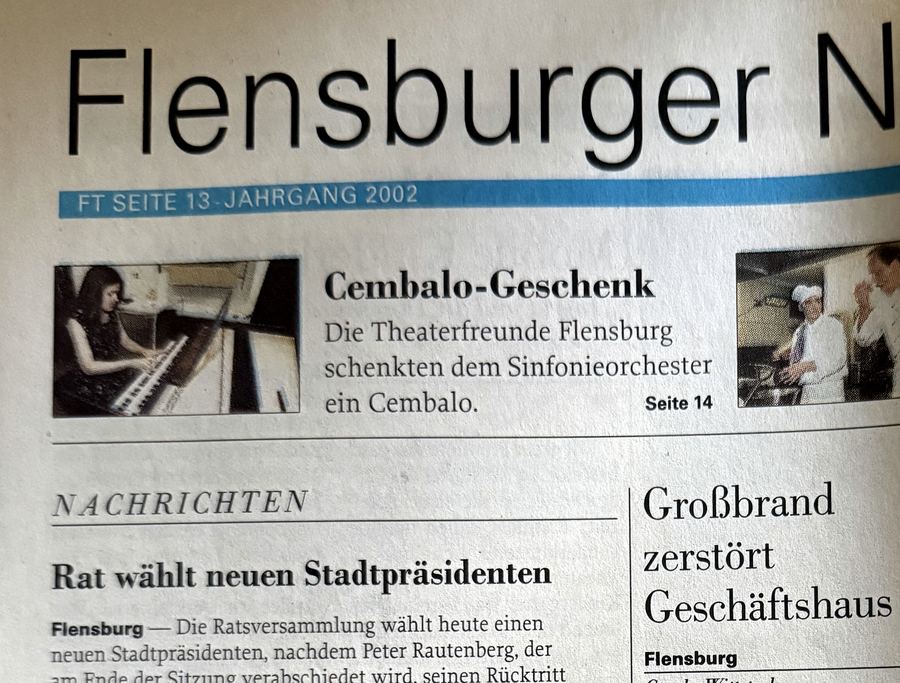 source excerpt
Flensburger Nachrichten · 2002
„Cembalo-Geschenk”
A brief item about the presentation of a harpsichord to the orchestra, illustrated with a photograph of Edyta at the instrument.
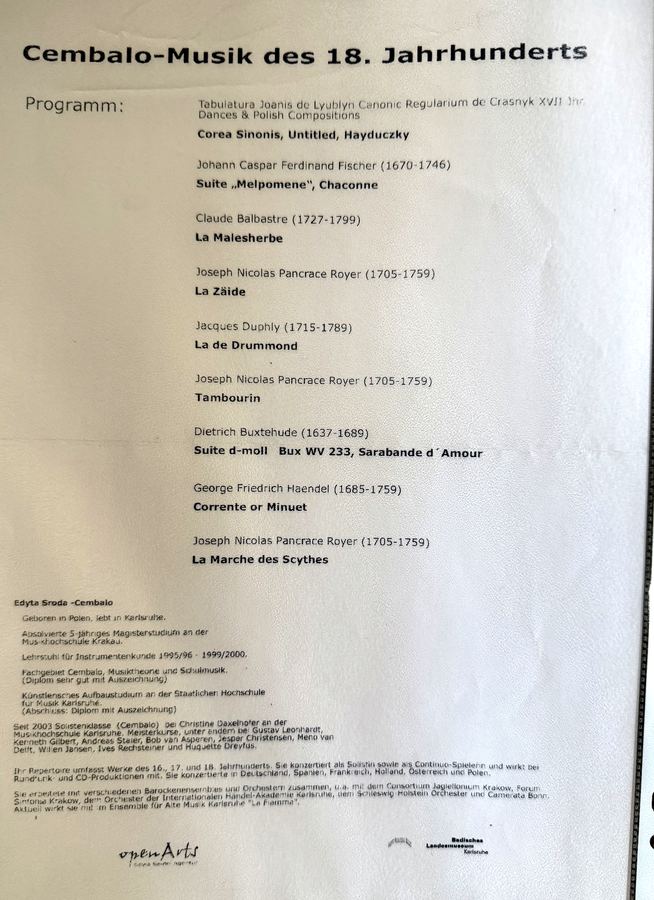 archival cover
Klappe auf · August 2003
The cultural context of the event
The magazine cover preserves the visual and urban context of the events among which Edyta’s concert was announced.
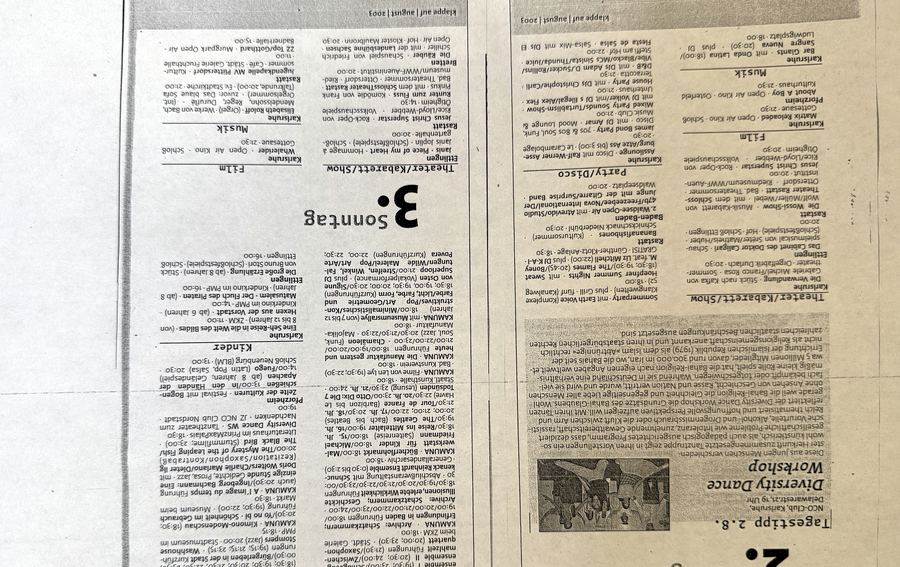 source excerpt
Klappe auf · 2 August 2003
Concert announcement in the city programme
The clipping shows the concrete presence of the harpsichord and Edyta’s name in Karlsruhe’s extensive cultural calendar.
Poland
Kraków’s musical community and the living performance of early music
For Edyta, Kraków was not only a place of study, but also the environment in which her skills as a pianist, conductor, music educator and harpsichordist matured in parallel. At that time, the Academy of Music brought together performers and teachers who were developing a conscious practice of early music in Poland, with a particularly important role played by the Department of Harpsichord and Early Instruments headed by Professor Elżbieta Stefańska.
The Bach Days combined concerts with lectures and reflection on rhetoric. Music was treated as speech: a structured utterance intended to instruct, move and give pleasure to the listener. In this approach, articulation, accent, ornament, tempo and the shaping of the phrase are not decorations, but means of constructing the meaning of a work and the dialogue between performer and audience.
A press report from 2000 places Edyta among the students and graduates of the Kraków Academy presenting Bach’s music. It is an important record of her belonging to a living performance community in which work with sources, historical instruments and style was combined with regular concert practice.
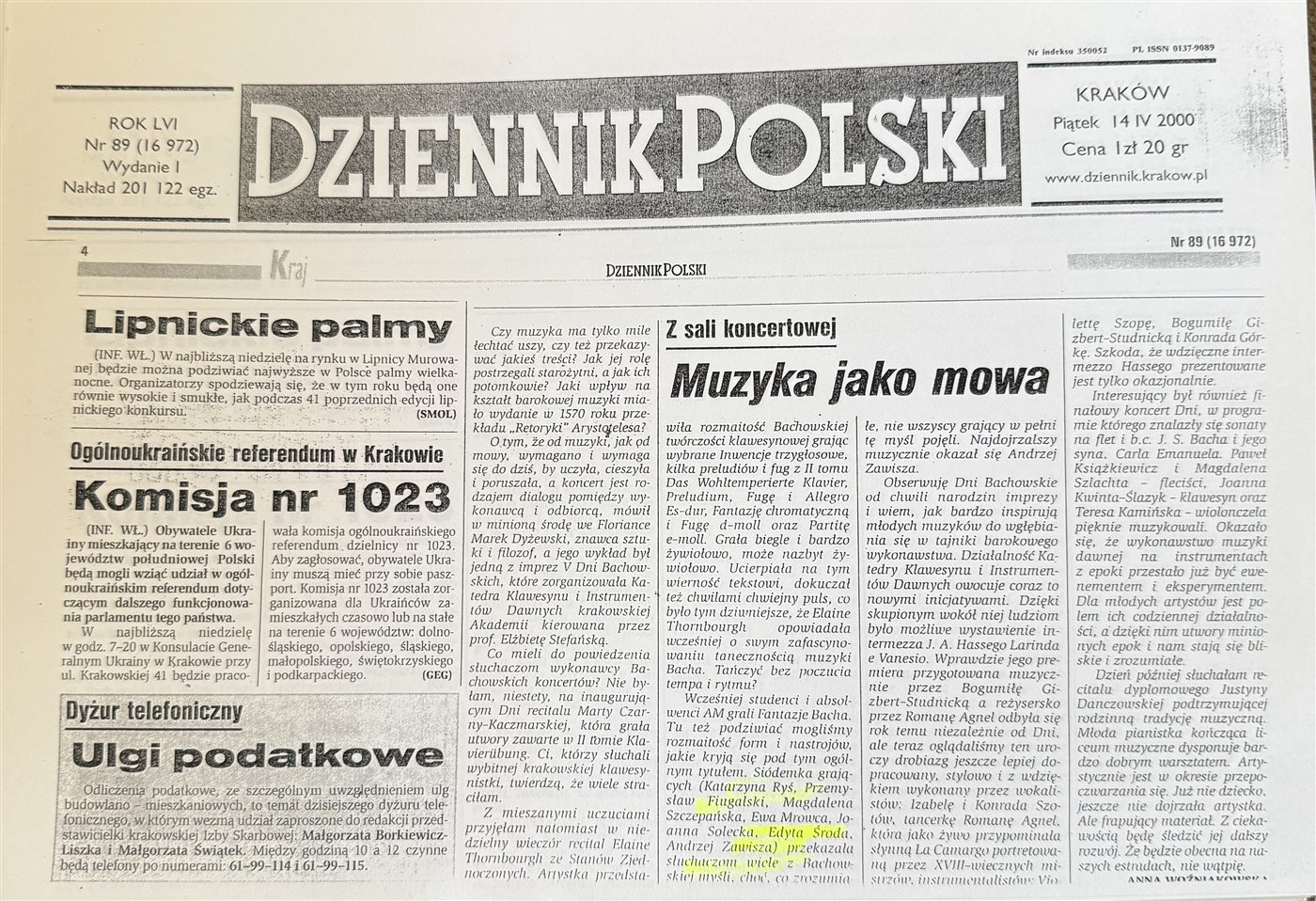
14 April 2000
„Muzyka jako mowa”
Anna Woźniakowska’s report from the 5th Bach Days describes the festival not as a series of disconnected recitals, but as an encounter between performance and reflection on the language of music. One item in the programme was a lecture by Marek Dyżewski on rhetoric and on the concert understood as a dialogue between performer and listener.
The article presents a broad cross-section of Bach’s harpsichord music: the three-part inventions, preludes and fugues from the second volume of ‘Das Wohltemperierte Klavier’, the ‘Prelude, Fugue and Allegro’ in E-flat major, the ‘Chromatic Fantasia and Fugue’ in D minor and the ‘Partita’ in E minor. Edyta was listed among the Academy’s students and graduates who conveyed to the audience the richness of forms and moods contained in this music.
The text also demonstrates the significance of the Kraków harpsichord school. The work of the Department of Harpsichord and Early Instruments under Professor Elżbieta Stefańska created a space in which young musicians confronted knowledge of the period with real sound, ensemble responsibility and the demands of a concert.
For Edyta’s history, this is evidence of the stage at which harpsichord studies, piano experience and her earlier conducting education began to form a single way of thinking about music — one based on structure, listening to partners, rhetoric and the conscious shaping of time.
Dziennik Polski · Kraków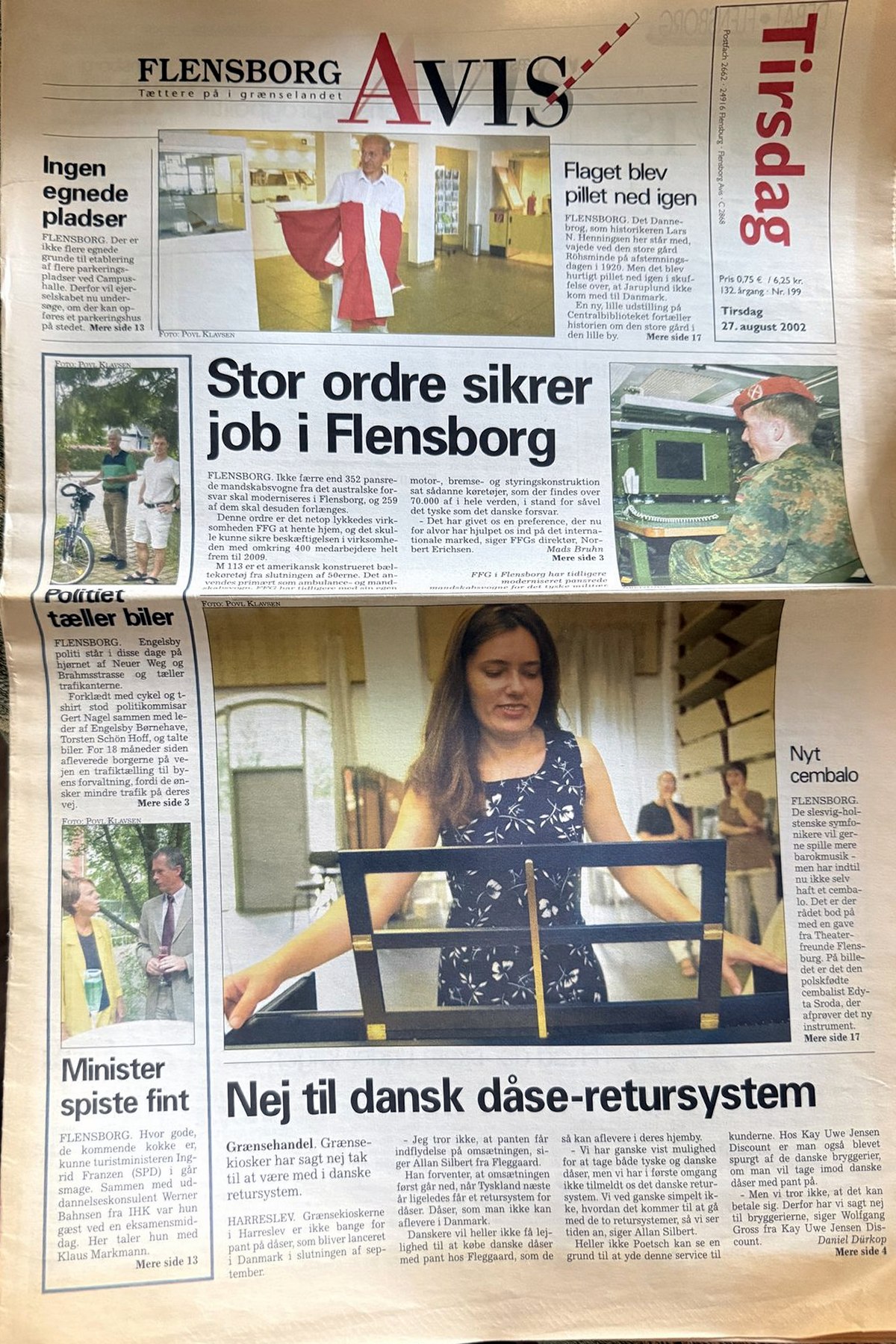
Denmark and the border region
Edyta on the front page of ‘Flensborg Avis’
The Danish newspaper showed Edyta at the Schleswig-Holstein symphony orchestra’s new harpsichord. The article announced a concert during which she was to present music from the seventeenth and eighteenth centuries.
The archive contains both the front page and the continuation of the article, as well as a prepared Polish translation. This means that in the Polish version we do not have to reduce the material to an image: we can explain why Edyta was entrusted with the first presentation of an instrument important to the orchestra.
It is also a trace of international activity conducted beyond the grand festival headlines — in the everyday life of institutions, orchestras and local musical communities.
The journey continues